The ADC's 4,022MW is NERC's mid-2026 average; NERC put the same quarter at 4,501.06MW in 2025 and 4,059.94MW in 2023, when Tinubu took office
On 11 November the ADC said the APC had called 4,500 megawatts a crisis in 2023 and now admits average generation of 4,022. The 4,022 is the electricity regulator's exact figure for April to June 2026. The 4,500 is in the APC's 2023 manifesto as the most the grid could distribute, not as an average. On NERC's own averages the same quarter of 2023 ran at 4,059.94MWh/h, 37.54 above now, and the same quarter of 2025 at 4,501.06, 478.66 above now. The ADC quotes the 2023 health insurance and ICT jobs pledges accurately, and its poverty and minimum wage figures hold on World Bank and NBS data.
On 11 November 2026 the African Democratic Congress answered the All Progressives Congress's new manifesto with a statement that set two power figures side by side: "In 2023, the APC described electricity supply of 4,500 megawatts as a crisis. Its new manifesto acknowledges average generation of just 4,022 megawatts. How does a government campaign to solve a crisis it has made worse?" Vero Record checked both numbers against the documents behind them. The 4,022 is exact: it is the Nigerian Electricity Regulatory Commission's average for April to June 2026. The 4,500 is in the APC's 2023 manifesto, but as the most the grid could deliver to consumers, not as an average. On the regulator's own measure, average output in the same quarter of 2023, in which President Bola Tinubu took office, was 4,059.94 megawatts, 37.54 more than now. A fall the size of the one the ADC describes did happen, but within the last year: April to June 2025 averaged 4,501.06 megawatts.
The statement was signed by the party's National Publicity Secretary, Bolaji Abdullahi, and was published on 11 November by, among others, the Nigerian Tribune and Vanguard. The words quoted above are from the Tribune's text; Vanguard's version of the closing question reads "a crisis it has made remarkably worse". The ADC's website could not be reached on 12 November. The statement also says Mr Tinubu promised in 2023 health insurance for 40 per cent of Nigerians within two years and one million ICT jobs within 24 months, that poverty "has risen to 63 per cent", and that the N70,000 minimum wage "has lost more than a quarter of its purchasing power". It was a reply to the APC's 2027 to 2031 manifesto, which press reports of 10 and 11 November describe as a 109-page document. Vero Record could not find that manifesto published online and did not read it, so the ADC's 4,022 is tested here against the regulator's report it matches.
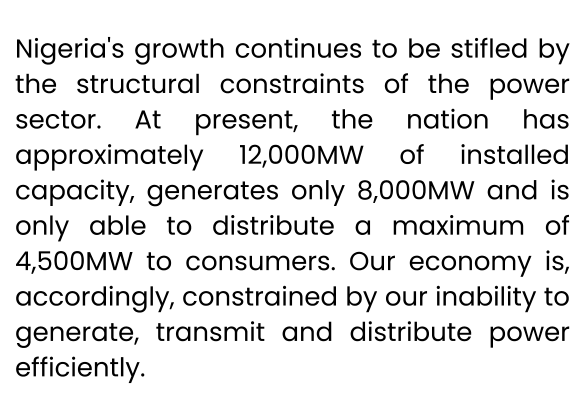
The APC's 2023 manifesto, "Renewed Hope 2023: Action Plan for a Better Nigeria", is on the party's website as an 80-page file created on 19 October 2022. Its power section, on page 30, reads: "At present, the nation has approximately 12,000MW of installed capacity, generates only 8,000MW and is only able to distribute a maximum of 4,500MW to consumers." The passage speaks of growth "stifled by the structural constraints of the power sector"; the word "crisis" is the ADC's, not the manifesto's. More important for the comparison, the 4,500 is a ceiling on what reached consumers, written before the 2023 election, while the 4,022 is an average across a quarter. The section headed "Generation and Transmission Targets" on the same page sets no figure in megawatts. Nor are the manifesto's other numbers the regulator's: it says the country "generates only 8,000MW", while NERC's reports for the first half of 2023, the earliest Vero Record retrieved, put average available generation capacity at 4,605.72MW and 4,387.91MW.
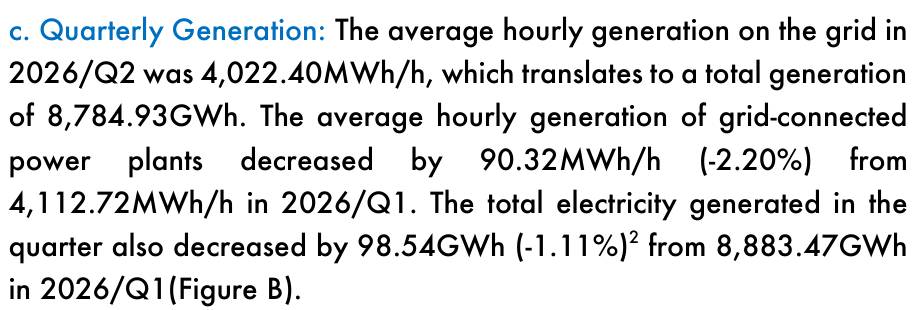
NERC's report for the second quarter of 2026 states: "The average hourly generation on the grid in 2026/Q2 was 4,022.40MWh/h, which translates to a total generation of 8,784.93GWh." Average generation in megawatt-hours per hour is the same quantity as average output in megawatts, so this is the ADC's 4,022. The total checks: 8,784.93GWh over the quarter's 91 days, or 2,184 hours, is 4,022.40MWh/h. Press accounts of the APC's new manifesto quote the same 4,022 for the second quarter of 2026. On this number the ADC is accurate.
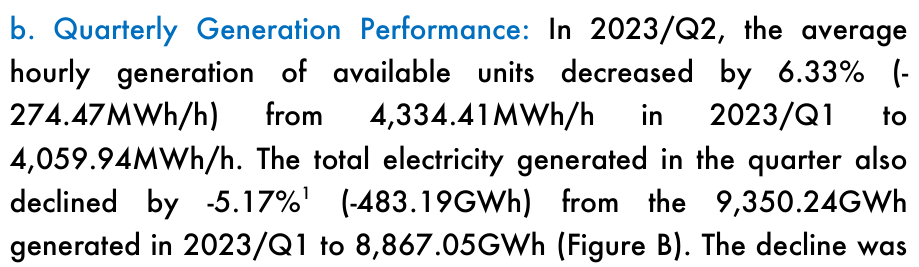
The regulator's report for the same quarter of 2023 supplies the comparison the ADC did not make. Average hourly generation was 4,059.94MWh/h, down from 4,334.41MWh/h in the first quarter, and the quarter's total was 8,867.05GWh. Mr Tinubu was sworn in on 29 May 2023, so two of that quarter's three months came before him. Against it, April to June 2026 was 37.54MWh/h lower, a fall of 0.92 per cent. Over the first half of each year the gap is wider: 18,217.29GWh in 2023 against 17,668.40GWh in 2026, which over 4,344 hours is an average of 4,193.67MWh/h against 4,067.31MWh/h, a fall of 126.36, or 3.01 per cent. On the regulator's figures, then, the ADC is right that generation is lower now than when Mr Tinubu took office. Measured like for like, the fall is under 1 per cent for the quarter and 3 per cent for the half-year, not the 478 megawatts, or 10.62 per cent, that its two numbers suggest.
What reached the distribution companies shows the same pattern. NERC's 2023 report puts the energy received by the DisCos in the second quarter at 3,251.31MWh/h; its 2026 report puts their average offtake in the same quarter at 3,197.03MWh/h, which is 54.28 lower, or 1.67 per cent. Both are well short of the 4,500MW the 2023 manifesto gave as the maximum. Two other measures moved the other way: energy billed to customers rose from 5,789.21GWh to 5,812.31GWh, up 0.40 per cent, and average available generation capacity rose from 4,387.91MW to 4,454.17MW, up 66.26MW.
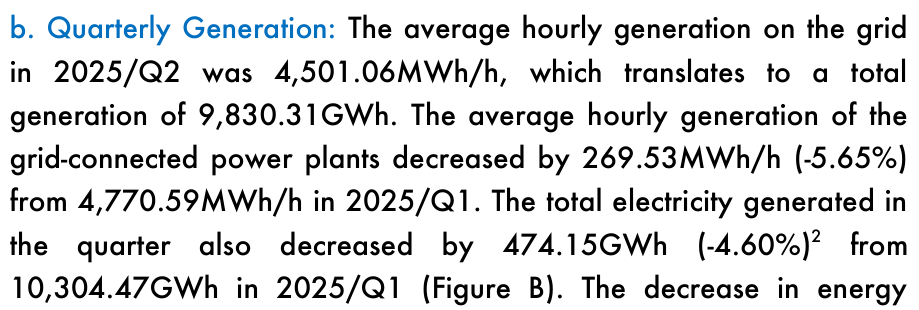
Between those two quarters lies a year the ADC's comparison leaves out. NERC's report for the second quarter of 2025 records average hourly generation of 4,501.06MWh/h, down from 4,770.59MWh/h in the first quarter of 2025. Vero Record assembled the regulator's quarterly averages from ten reports, from the first quarter of 2023 to the second quarter of 2026. Of those fourteen quarters, the first quarter of 2025 is the highest, and 2025 as a whole averaged 4,474.19MWh/h, against 4,186.30 in 2023 and 4,144.49 in 2024. Output then fell: to 4,112.72MWh/h in the first quarter of 2026, 657.87 or 13.79 per cent below a year earlier, and to 4,022.40 in the second, 478.66 or 10.63 per cent below the 4,501.06 of April to June 2025. That is almost exactly the drop the ADC's two figures describe, but it happened between 2025 and 2026, not between 2023 and 2026. The latest quarter is the third lowest of the fourteen; only the third quarter of 2023 (3,924.28MWh/h) and the second quarter of 2024 (4,018.57MWh/h) were lower.
The reports explain the recent falls only quarter by quarter. In the first quarter of 2026, NERC says, average output from the five grid-connected hydro plants fell 210.38MWh/h from the previous quarter, "primarily driven by the significant drop in output from Zungeru_1", whose average went from 440.17 to 280.68MWh/h. In the second quarter hydro output fell a further 118.79MWh/h, led by Kainji, whose average dropped from 528.02 to 409.44MWh/h, while thermal plants added 28.47MWh/h. Neither report compares the year with 2025 or gives a reason for the fall from the 2025 level.
The ADC's account of the 2023 promises is accurate. Page 47 of the 2023 manifesto commits to "a mandatory health insurance scheme to cover at least 40% of the population within two years", and page 49 says "a Tinubu administration will strive to create one million new jobs in the ICT sector within its first 24 months in office". Counted from the inauguration on 29 May 2023, the two years ended on 29 May 2025, 532 days before this report. On coverage today, Arise News reported on 21 September 2026 that the Director General of the National Health Insurance Authority, Kelechi Ohiri, put enrolment at over 23 million. Vero Record did not obtain an NHIA record, and with no census since 2006 the share of the population depends on which estimate is used. The "15,000 jobs and opportunity pathways" that the ADC attributes to government figures could not be traced to a published document; the statement does not name its source.
The poverty figure matches the World Bank's estimate. Figure 1.26 of the Bank's Nigeria Development Update of October 2026 plots the national poverty rate. Read against the chart's own gridlines, the line stands at about 63 per cent in 2025 and 2026, up from the 40.1 per cent the chart labels for the 2018/19 household survey and the 56.2 per cent for 2022/23. The report's text says poverty will remain elevated "before declining gradually to 61.1 percent by 2028", and its summary says "The poverty rate has leveled off after rising continuously since 2019". The 63 per cent is a World Bank model estimate rather than a survey result, but it is a published figure and it supports the ADC's number.
The minimum wage figure also holds. The National Bureau of Statistics' consumer price index, which sets average prices in 2024 at 100, stood at 146.38 in September 2026. At those prices N70,000 buys what N47,820.74 bought at average 2024 prices, a loss of 31.68 per cent. N70,000 became the minimum wage in 2024, so that year's average is a fair base. Working back from the bureau's July 2026 index of 145.3 with its annual rates of 15.43 per cent to July 2026 and 24.94 per cent to July 2025 gives a July 2024 index of about 100.75 and a similar loss, 31.17 per cent. Either way, "more than a quarter" is supported.
Taken figure by figure, the statement holds on five points: the 4,022, the 40 per cent and one million job pledges, the 63 per cent poverty estimate and the fall in the minimum wage's value. Its power comparison sets a pre-election ceiling against a quarterly average. Measured the same way, average generation from April to June 2026 was 0.92 per cent below the quarter in which Mr Tinubu took office and 10.63 per cent below the same quarter of 2025, when the regulator's average stood at 4,501.06MWh/h.
The documents do not say why output fell after 2025. NERC's quarterly reports give averages, not peaks, so the 2023 manifesto's 4,500MW maximum cannot be set against a 2026 peak from these sources; press accounts say the new manifesto gives peak distribution of 5,800MW, which Vero Record did not verify. The 2023 manifesto does not say how or when its 4,500 was measured. The NHIA's enrolment count, the 2027 manifesto's targets and the ADC's 15,000 ICT figure were not checked against primary records. Nothing in this report suggests wrongdoing by anyone.
What this rests on
Documents read for this report: the APC's 2023 manifesto, Renewed Hope 2023: Action Plan for a Better Nigeria (80 pages, apc.com.ng/img/apc_renewed_hope.pdf, file created 19 October 2022), pp.30, 47 and 49 (PDF pp.32, 49 and 51), downloaded 12 November 2026 and kept as a four-page extract; NERC quarterly reports for 2023/Q2 (pp.2, 3 and 11), 2023/Q4 (p.ix), 2024/Q2 (pp.ix and xviii), 2024/Q4 (pp.viii and xviii), downloaded 12 November 2026, and for 2025/Q1, 2025/Q2, 2025/Q3, 2025/Q4, 2026/Q1 and 2026/Q2 (p.3 of each; 2026/Q1 p.19; 2026/Q2 pp.4, 12, 19 and 20), downloaded in October 2026 for earlier reports and re-read; World Bank, Nigeria Development Update, October 2026, PDF pp.11, 33 and 34 (Figure 1.26); NBS Consumer Price Index reports for July 2026 and September 2026, p.6 of each. Arithmetic re-done: Q2 2026, 8,784.93GWh / 2,184h = 4,022.40MWh/h; Q2 2023, 8,867.05GWh / 2,184h = 4,060.00 (printed 4,059.94); Q1 2023, 9,350.24GWh / 2,160h = 4,328.81 (printed 4,334.41, a difference of 5.60 in NERC's own figures; comparisons use the printed averages). Q2 2026 against Q2 2023: 4,022.40 - 4,059.94 = -37.54 (-0.92%). First halves: 2023, 9,350.24 + 8,867.05 = 18,217.29GWh / 4,344h = 4,193.67; 2026, 8,883.47 + 8,784.93 = 17,668.40GWh / 4,344h = 4,067.31; difference -126.36 (-3.01%). ADC's implied fall: 4,500 - 4,022 = 478, / 4,500 = 10.62%. DisCos: 3,251.31 - 3,197.03 = 54.28MWh/h (-1.67%); 6,982.32GWh / 2,184h = 3,197.03, matching the printed offtake. Energy billed: 5,812.31 - 5,789.21 = 23.10GWh (+0.40%). Available capacity: 4,454.17 - 4,387.91 = 66.26MW (+1.51%). Annual averages from quarterly totals: 2023, 9,350.24 + 8,867.05 + 8,664.82 + 9,789.87 = 36,671.98GWh / 8,760h = 4,186.30; 2024, 8,887.93 + 8,776.55 + 9,450.76 + 9,289.95 = 36,405.19GWh / 8,784h = 4,144.49; 2025, 10,304.47 + 9,830.31 + 9,227.56 + 9,831.58 = 39,193.92GWh / 8,760h = 4,474.19. Each quarterly total divided by its hours (90, 91 or 92 days) reproduces the printed average to within 0.01, except Q1 2023 as noted. Year on year: Q1 2026 against Q1 2025, 4,112.72 - 4,770.59 = -657.87 (-13.79%); Q2 2026 against Q2 2025, 4,022.40 - 4,501.06 = -478.66 (-10.63%); from the Q1 2025 high, -748.19 (-15.68%). Ranking of the fourteen quarterly averages from Q1 2023 to Q2 2026: Q2 2026 is twelfth, above Q2 2024 (4,018.57, grid total including Zungeru) and Q3 2023 (3,924.28). Health insurance deadline: 29 May 2023 plus two years = 29 May 2025; 29 May 2025 to 12 November 2026 = 532 days. Poverty: Figure 1.26 line read from the PDF's vector coordinates, gridlines 0% at y=366.5 and 70% at y=206.5 (2.2857pt per point); 2025 at y=221.5 gives 63.4, 2026 at y=222.5 gives 63.0, and the same reading gives 61.25 for 2028 against the printed 61.1, so about 63 per cent. Minimum wage: 70,000 / 1.4638 = N47,820.74; 1 - 100/146.38 = 31.68%; chain, 145.3 / 1.1543 / 1.2494 = 100.75, and 1 - 100.75/146.38 = 31.17%.
What this does not establish
Why average generation fell in 2026 from its 2025 level; the NERC reports explain only quarter-on-quarter changes, plant by plant. Peak generation or distribution in any quarter; the quarterly reports give averages, so the 2023 manifesto's 4,500MW maximum cannot be set against a 2026 peak, and the 5,800MW peak attributed in press reports to the new manifesto was not verified. How or when the 2023 manifesto's 4,500MW, 8,000MW and 12,000MW were measured; the document gives no source. The text of the APC's 2027 to 2031 manifesto, which Vero Record could not obtain, including whether it moves the health insurance target to 2031. The NHIA's current enrolment and the share of the population it represents; no NHIA record was obtained and Nigeria has had no census since 2006. The source of the ADC's "15,000 jobs and opportunity pathways". The National Minimum Wage (Amendment) Act 2024 was not retrieved; the purchasing power check uses the NBS index only. The ADC's statement was read as published by the Nigerian Tribune and Vanguard, not from the party's own website, which could not be reached. Nothing in this report suggests wrongdoing by anyone.
What we did ourselves
Took the ADC's figures from its 11 November statement as published by the Nigerian Tribune and Vanguard. Downloaded the APC's 2023 manifesto from the party's website and found the passage behind the 4,500 megawatts, and the exact wording of the health insurance and ICT jobs pledges. Matched the ADC's 4,022 to NERC's second-quarter 2026 report, then built a series of NERC's average hourly generation for fourteen quarters from ten quarterly reports, checking every printed average against the quarter's total generation and hours, and computing like-for-like comparisons for the same quarter and the same half-year, annual averages and a ranking. Set the DisCos' energy offtake, energy billed and available capacity for the second quarters of 2023 and 2026 against each other. Read the World Bank's poverty chart from the PDF's vector coordinates and recomputed the minimum wage's loss of purchasing power from the NBS index.
Sources for this report
(A) APC, Renewed Hope 2023: Action Plan for a Better Nigeria, pp.30, 47 and 49; Nigerian Electricity Regulatory Commission quarterly reports for 2023/Q2, 2023/Q4, 2024/Q2, 2024/Q4, 2025/Q1 to 2025/Q4, 2026/Q1 and 2026/Q2 (operational and commercial performance sections and key facts); World Bank, Nigeria Development Update, October 2026, Figure 1.26 and pp.11 and 33; National Bureau of Statistics, Consumer Price Index, July 2026 and September 2026, p.6.
- ADC faults Tinubu, APC's 2027 manifesto, says it recycles unfulfilled 2023 promises (text of the ADC statement) · Nigerian Tribune · 11 November 2026
- Tinubu recycling failed 2023 promises in 2027 manifesto, says ADC · Vanguard · 11 November 2026
- Renewed Hope 2023: Action Plan for a Better Nigeria (80 pages) · All Progressives Congress · October 2022
- Second Quarter 2023 NERC Quarterly Reports · Nigerian Electricity Regulatory Commission · February 2024
- Fourth Quarter 2023 NERC Quarterly Reports · Nigerian Electricity Regulatory Commission · April 2024
- Second Quarter 2024 NERC Quarterly Reports · Nigerian Electricity Regulatory Commission · October 2024
- Fourth Quarter 2024 NERC Quarterly Reports · Nigerian Electricity Regulatory Commission · March 2025
- First Quarter 2025 NERC Quarterly Reports · Nigerian Electricity Regulatory Commission · June 2025
- Second Quarter 2025 NERC Quarterly Reports · Nigerian Electricity Regulatory Commission · October 2025
- Third Quarter 2025 NERC Quarterly Reports · Nigerian Electricity Regulatory Commission · January 2026
- Fourth Quarter 2025 NERC Quarterly Reports · Nigerian Electricity Regulatory Commission · April 2026
- First Quarter 2026 NERC Quarterly Reports · Nigerian Electricity Regulatory Commission · July 2026
- Second Quarter 2026 NERC Quarterly Reports · Nigerian Electricity Regulatory Commission · September 2026
- Nigeria Development Update, October 2026: Beyond the Federal Purse · World Bank · October 2026
- Consumer Price Index, September 2026 · National Bureau of Statistics · 15 October 2026
- Consumer Price Index, July 2026 · National Bureau of Statistics · August 2026
- Tinubu's re-election manifesto presents familiar promises, faces similar execution hurdles · Parrot Nigeria · 11 November 2026
- NHIA enrolment surpasses 23 million as agency expands financial protection for Nigerians · Arise News · 21 September 2026
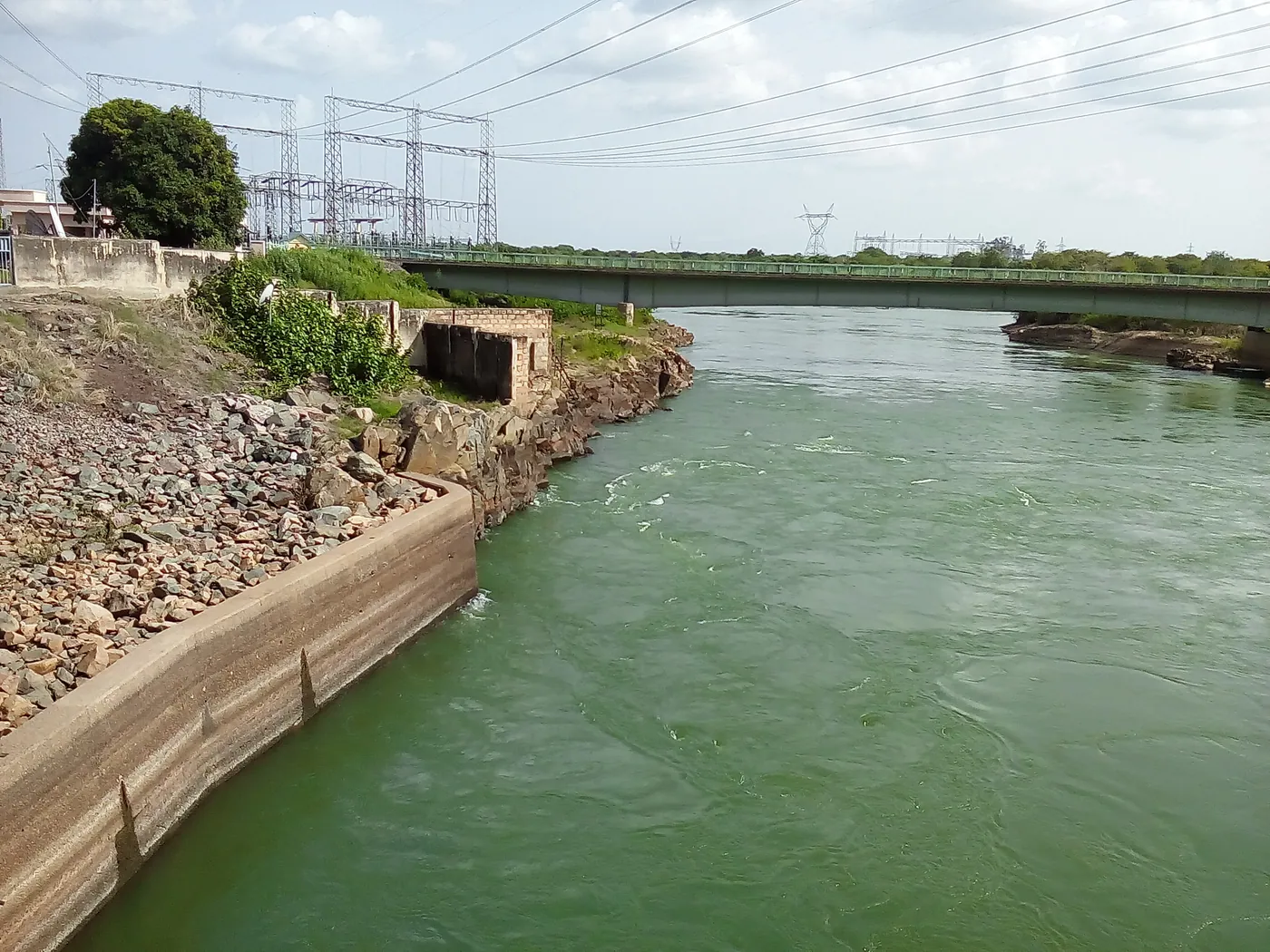
- Kainji Dam (photograph) · Wikimedia Commons · 24 May 2017
Confidence: high. This is our own assessment of whether the event occurred as described, separate from the grade, which describes what kind of thing the claim rests on.
Not obtained: where the underlying document is named above but not linked, we did not hold a copy at the time of publication. We purchase nothing and request nothing in our own name.
Corrections
None on this report. If you find an error, it will be published here, at the same length, with the date it was found, and the original wording will remain visible above it.
Dr VeroInvestigations editor, Vero Record
Reads the Nigerian public record that others leave unread: budgets, audit reports, court files and registers. Every claim on this page carries the grade of the document behind it, and the report says what that document does not establish.
All 196 reportsHow we grade evidenceAdd Vero Record as a preferred source on Google