
Method
Everything published here carries a mark showing what kind of thing it rests on. This page explains the marks, what they cost us, and the rules we do not break to get a document.
The three grades
(A) Primary record. A court file, an official register, a government filing, a statute, an audited account, a gazette. Something we retrieved ourselves and for which the query, docket number or reference is printed alongside the claim, so that a stranger can retrieve it too.
(B) Attributed statement. Someone identifiable said it, and that they said it is documented. Whether what they said is true is a separate question, and this grade does not answer it. A denial and an admission both sit here, at the same weight.
(C) Inference. Our own reasoning from the material above, including any arithmetic we performed. A calculation is graded (C) even when every input to it is graded (A), because the sum is ours and not the record's. The inputs are printed so a reader can redo it and get a different answer if we were wrong.
The rule behind the rule
A record in an (A) source does not make every allegation inside it a fact. A filing can prove that an allegation was made without proving that it was ever established. A settlement can prove that a claim was resolved and prove nothing about whether the claim was true.
This distinction accounts for most of the difference between what we publish and what is published elsewhere from the same documents. Where it matters, we make it explicitly, in the sentence itself rather than in a note at the bottom.
Transmission is not corroboration
Four outlets carrying the same claim is one source, not four, unless each of them went to the record separately. Where we count sources, we count records, and we say which ones. A claim that has been repeated for thirty years without anyone returning to the document is not thirty years of evidence. It is one document and thirty years of repetition.
How a document is verified before it is used
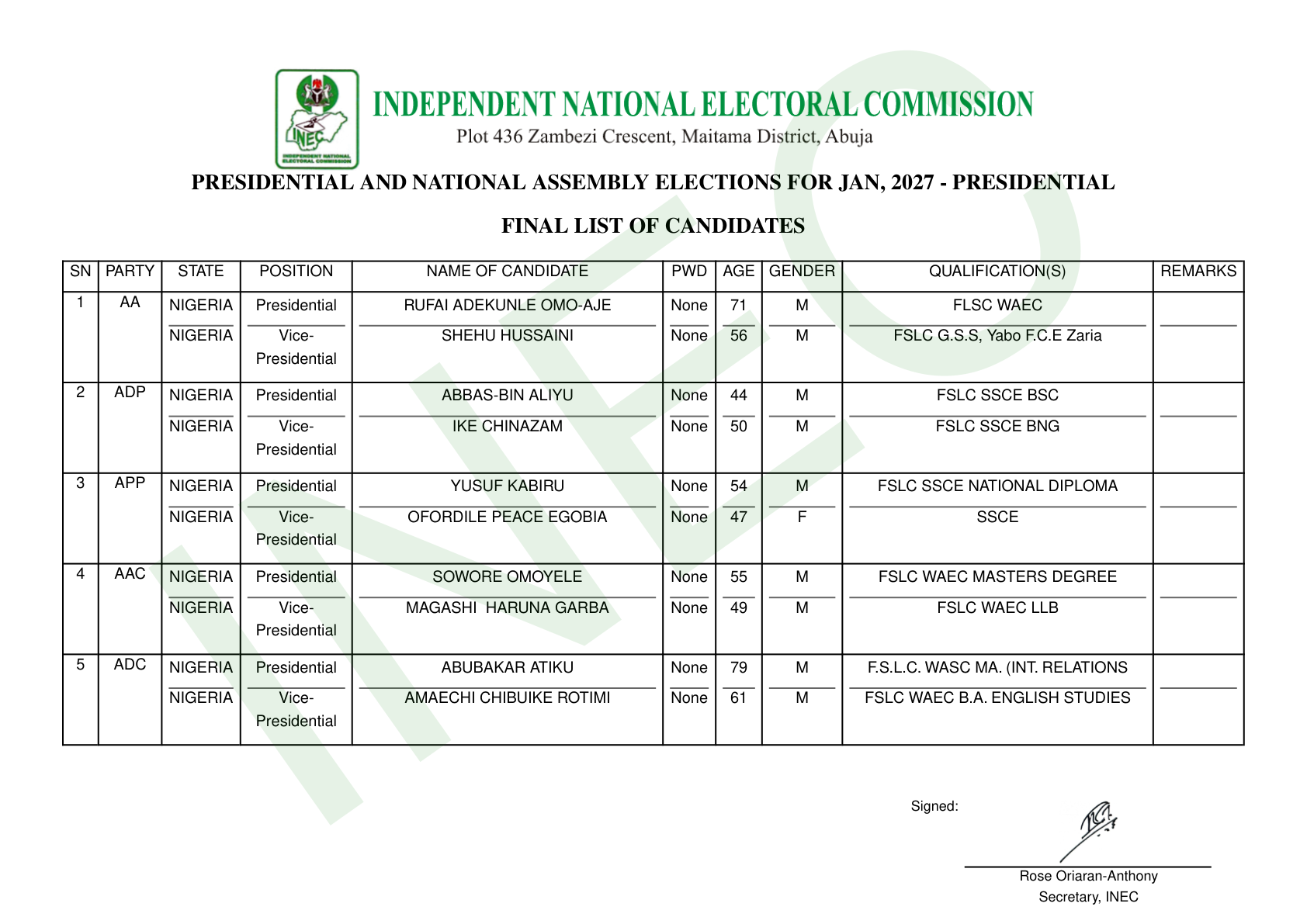
A retrieved file is not evidence until it has survived the same checks we would apply to a document we distrusted. We ask, in order: which institution issued it, and does its own site, registry or portal corroborate that issuance independently of the copy we hold; does the document carry a reference number, seal, signature block or letterhead consistent with others we have seen from the same office; does its internal dating survive a timeline check against events it refers to; and does the file's own metadata, where present, describe an author, creation date and software chain consistent with the claimed origin, rather than a mismatch that would suggest the document was assembled or altered after the fact.
PDF and image metadata are read on every primary document before it is cited, not after a reader asks. A creation date that postdates a claimed filing date, an author field naming an unrelated party, or software history showing recent re-saving of an old file are each, on their own, reasons to hold a document rather than publish from it. None of these checks proves a document genuine. They can only fail it. A document that passes every check we know to run is published as (A) with the checks implied by the grade; a document we could not fully check is published, if at all, with the specific gap in verification stated in the body rather than left to the grade to imply.
The open-source techniques behind a file
Most of what reaches a published page began as one loose thread pulled through tools that have nothing to do with journalism as it is usually taught. A photograph is checked against its own shadows and against satellite imagery for the date and place it claims. A claimed location is cross-read against road layouts, signage, vegetation and building geometry visible in mapping imagery, independent of any caption. A domain's registration history, hosting changes and archived states are pulled from public WHOIS and web-archive records to establish when a claim, a company or a document first existed online, and whether it existed at all on the date somebody says it did.
Corporate structures are traced the same way a genealogist traces a family: through registries, not press releases. A director's name in one filing is checked against every other public filing that name appears in, across jurisdictions where records are open, building a map of connections that no single document discloses on its own. Where two entities share a registered address, a phone number, an email domain or a director, that is recorded as a documented connection and stated as exactly that, a connection, never silently upgraded to common ownership or control, which are different claims requiring different evidence.
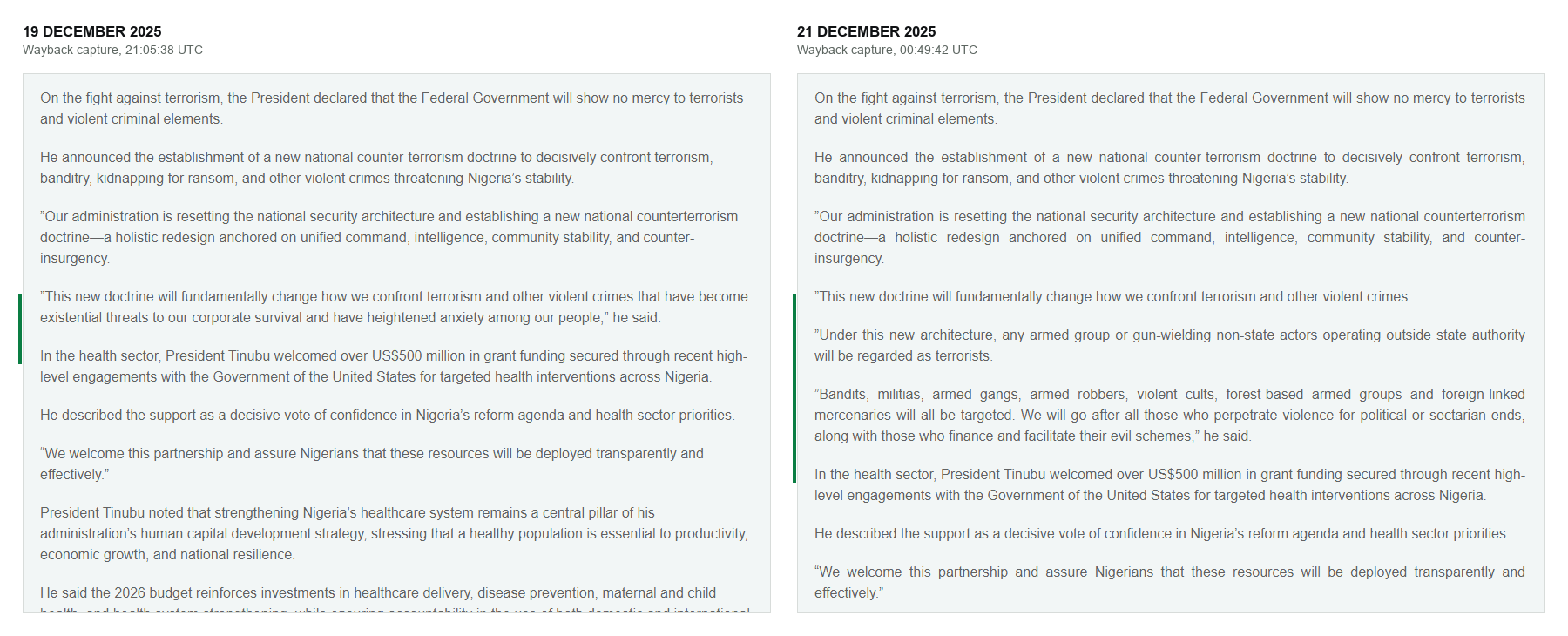
Archived and deleted material is treated as part of the record, not as a curiosity. A government page that changes its wording, a company site that goes dark, a social account that is deleted after a document names it: each is captured, dated, and kept, because the fact that something was said and later removed is frequently more informative than either version alone. Where we cite a page that later changed, we cite the archived capture and its timestamp, not our memory of what it said.
Digital evidence has a chain, and we keep it
A screenshot is the weakest form of evidence this newsroom uses, because a screenshot can be edited with the same ease it can be taken. Where a live page is the only available record of a claim, we capture it with its full request headers, timestamp and, where the page allows it, its underlying markup, not a cropped image. Where a document exists as a file, we record its cryptographic hash at the moment of retrieval, so that any later dispute about whether the copy we hold matches what was published can be settled by comparing hashes rather than by comparing memories.
None of this substitutes for the primary source. It exists so that if a source page disappears, changes, or is disputed, there remains a dated, checkable record of what it said and when we captured it, and so that a reader can verify that the copy on this site is the copy that existed at the time we cite, and not a version edited afterward to fit the story.
What we will not do to get a document
We obtain no record whose acquisition would create an attributable transaction. No purchased filings, no certified extracts, no register searches requested in our own name, no orders placed with a custodian who logs who asked.
This costs us. There are questions in every file that a single paid extract would close, and they stay open. Where that happens we name the document, name its custodian, print the price, state the inference plainly as an inference, and leave it there. A reader who wants it closed can close it, and will owe us nothing for doing so.
The reason is not only safety. A single copy in one interested pair of hands is weaker evidence than many copies obtained independently by people who owe this work nothing.
Corrections
A correction is published in place: on the page where the original claim stood, at the same length, under the same heading, with the date it was found. The original wording stays visible above it. Nothing is silently edited, and nothing is deleted.
This is deliberately the most expensive possible way to handle an error, and it is the only version we trust ourselves to keep to. A publication that can quietly change what it said last week has no way to prove it did not.
Who does this work
A byline on this site names a role, not a person, and it names it because the disciplines involved are genuinely different from each other and a reader is entitled to know which one produced a given sentence. Retrieval and verification, which finds and authenticates the documents, is a different skill from analysis, which reconstructs a timeline and states what it does and does not establish. Both are different again from publication, which decides how a finding is presented so it reads clearly without reading as more certain than the grade beneath it allows.
We work the way an audit team works rather than the way a newsroom is usually staffed: a finding drafted by one person is checked against the primary record by a second person who did not draft it, specifically hunting for the reading that would break the claim, before either of them is satisfied it survives. A finding that cannot be broken by its own author's harshest colleague is not thereby proven true. It has only cleared the first bar, which is that nobody inside the process could find the flaw. The bar a reader applies afterward is a separate, and better, test.
The technical side of this work, the domain research, the metadata checks, the corporate-registry tracing, the archive captures, sits alongside the narrative side rather than beneath it. A finding is not considered ready because the writing is clean. It is ready when the writing, the sourcing and the technical verification behind it all point at the same conclusion independently, and any one of the three could be presented on its own to a skeptical stranger without embarrassment.
Design is treated as part of the evidentiary apparatus, not decoration applied afterward. The grading marks, the citation typography, the distinction between a photograph and a drawing on every image credit, the print stylesheet that renders a report identically on paper as on screen: these exist so that the visual presentation of a claim never implies more confidence than the claim has earned. A page that looks authoritative regardless of what it says is a liability in this kind of work, not an asset, so the design is built to carry exactly the weight of the grading system and no more.
How a finding is reviewed before publication
Before anything reaches a published page it passes through the same four tests listed in the sidebar of this page, applied in order, and a finding that fails any one of them is dropped however well it reads. First, is every document in the chain retrievable by a stranger, meaning named specifically enough, with a docket number, a reference, a URL or an archive timestamp, that someone with no relationship to this newsroom could find the same page and check it themselves. Second, is the finding new, or newly connected to material nobody had previously set beside it, since restating an already-established fact in new language is not investigation. Third, does the finding survive a hostile reading, meaning a second reviewer has specifically tried to construct the most damaging alternative explanation for the same evidence and failed to make it stick. Fourth, does the published version say plainly what the finding does not establish, not as a defensive afterthought but as a sentence carrying equal weight to the finding itself.
A finding that survives all four is graded, sourced, and published with the not-established statement attached. A finding that fails is not softened and published anyway with hedging language; it is held, or dropped, until the gap that failed it is closed by better evidence or the question is abandoned outright and, where relevant, recorded as an open question rather than quietly forgotten.
Where we stand
Nowhere. We are not on anyone's side, and the choice of subjects is the evidence for that rather than the assertion. Anyone with a documented public record is eligible, and the order in which files open is decided by which records are retrievable, not by who currently holds office.
We assert no criminality where no court has found any. We carry no advertising, we take no institutional funding, and we ask nothing of a reader who downloads a file.
What is real on this site today
Six reports are fully sourced and graded, one for each section, and they are listed on the front page under the lead. Every one of them rests on documents that anyone can retrieve: a Supreme Court judgment, monthly allocation communiqués, the Public Procurement Act, a State House proclamation, an ECOWAS withdrawal statement. The three dossiers are real. The method described on this page is real.
Everything else on the site is placeholder copy, written to show what a finished edition would look like, and labelled as such on every page it appears. We would rather run an obviously unfinished paper than a finished-looking one whose sentences cannot be checked.
What reading this costs you
Loading this page makes twenty-nine requests, weighs about half a megabyte, contacts no third party, sets no cookie, and runs one script, whose entire job is to print today's date in the strip at the top.
On we measured eight Nigerian news sites the same way, on the same machine, in the same browser, to find out whether that is unusual. It is. On a single homepage load they made between 70 and 283 requests, weighed between 1.5 and 4.9 megabytes, contacted between 10 and 57 third-party hosts, and set between 3 and 40 cookies. Every one of them loaded at least three advertising or analytics services and the heaviest loaded eighteen. (A)
We are not naming them. The point is not that those publications are bad, because several of them do serious work and advertising is how most of them survive. The point is that the arrangement has a price, that the reader pays it, and that it stays invisible unless somebody counts it. So we counted ours and published the number.
A measurement that did not work
We also tried to measure something we care about more. When a publication describes a document, does it link to the document? We sampled twenty-six live articles from six of those sites on the same day and found no outbound link to a court file, a register, a gazette or a government publication. Two further sites returned no articles to our tool at all and are not in that count. (C)
That sample is small, it covers one day, it depends on which articles happened to be on a homepage that morning, and our first attempt at it produced a false positive: the matcher counted a publication's own social media profile as a primary record because the profile address contained the publication's name. We fixed that and ran it again.
We are printing the result because it is what we found and because anyone can repeat it, not because it settles anything. A finding at that sample size is a reason to look harder, and it is graded accordingly.
What we get wrong
Being slow. A grading discipline means that a claim we believe to be true but cannot mark sits unpublished, sometimes for a long time, and occasionally forever. Other people publish it first and are usually right. We accept that trade because the alternative is a publication whose confident sentences and its guesses look identical on the page.