THE's 2027 table ranks 29 Nigerian universities, up from 24. All five additions are public, and three Nigerian entries sit inside the top 1,000
The ASUU president says the rise from 24 to 29 ranked universities is nothing to celebrate, and that only three are inside the top 1,000, one of them private. Vero Record matched the Nigerian entries in the publisher's 2026 and 2027 data. The top-1,000 claim is exact. The five newcomers are all public universities, and 33 other Nigerian entries are listed only as reporters, without a rank.
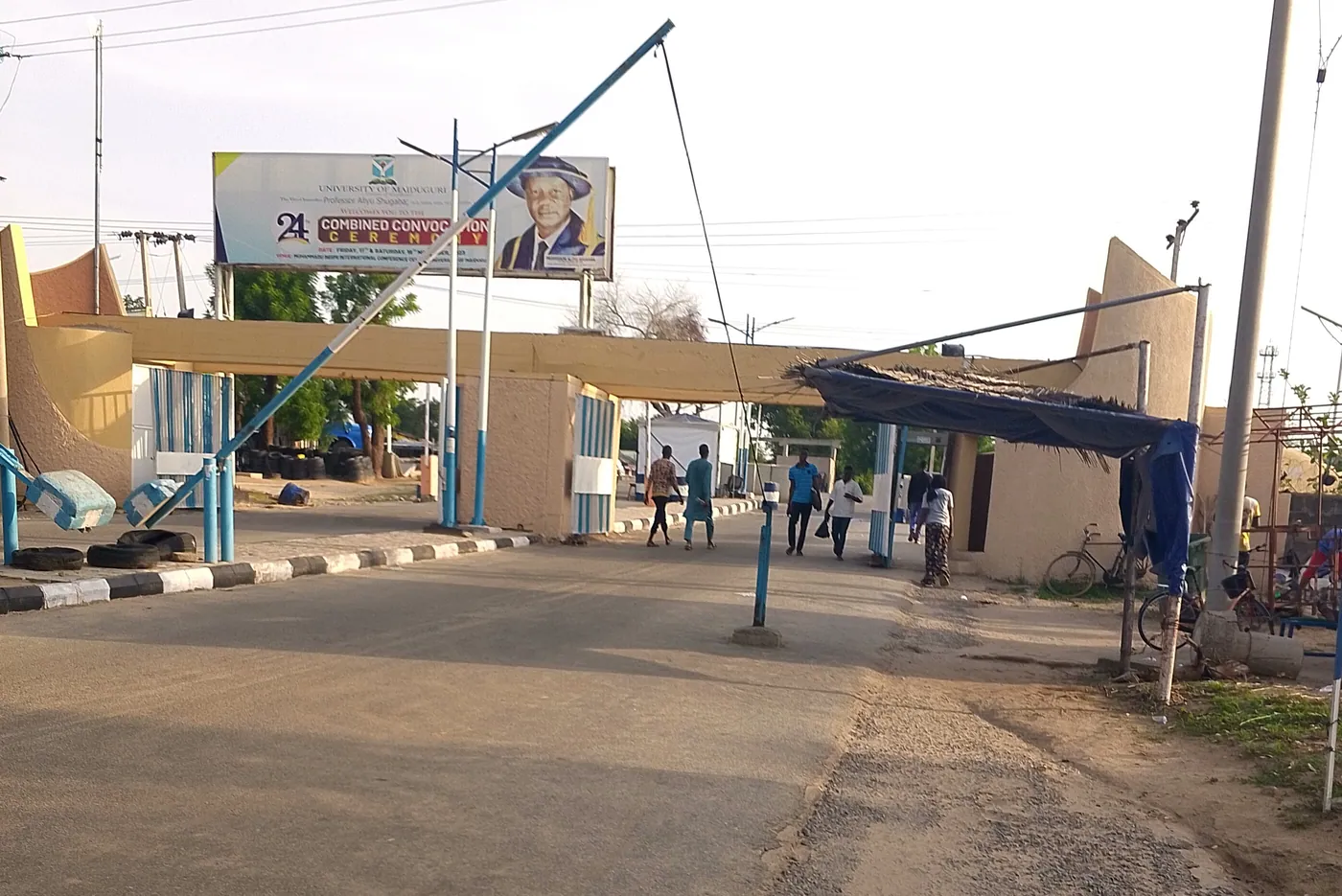
Times Higher Education's World University Rankings 2027 give a rank to 29 Nigerian universities, five more than the 24 in its 2026 table. Vero Record downloaded the data behind both editions from the publisher's website on 8 October 2026 and matched the Nigerian entries institution by institution. Every university ranked in 2026 is ranked again in 2027. The five additions are the University of Maiduguri, Olabisi Onabanjo University, Osun State University, Kwara State University and Michael Okpara University of Agriculture, Umudike.
The figure has become an argument. In an interview published by Punch on 6 October, the President of the Academic Staff Union of Universities, Prof Chris Piwuna, said the Federal Government had presented the 29 as evidence that its reforms were working. He disagreed. "Is it a movement from 24 to 29 that we should be celebrating? How many of these 29 are even within the 1,000 mark range? We have three, and one of them is a private university," he said. Later in the interview he said: "24 universities were already there; we have just increased by five, and some of them are private universities."
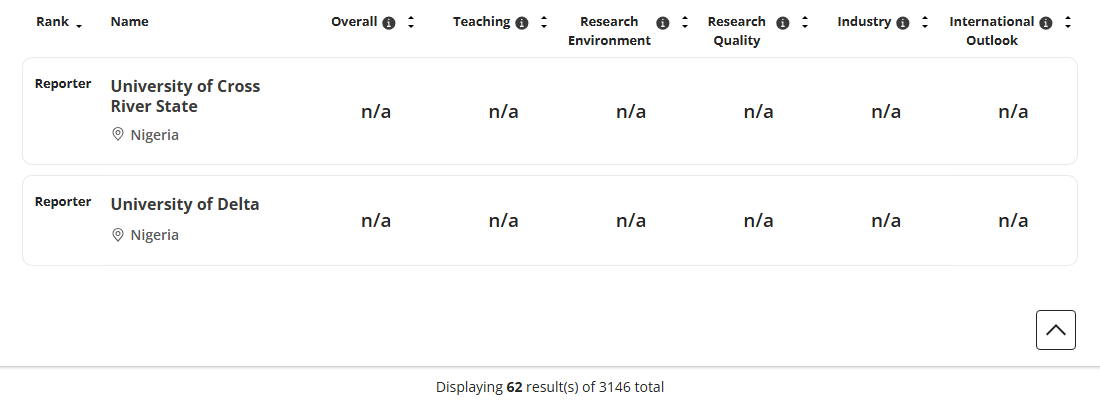
The 2027 table describes itself as covering "2,297 institutions from 118 countries and territories". Filtered to Nigeria, the publisher's ranking page returns 62 entries. Twenty-nine carry a rank. The other 33 are listed as "Reporter", with "n/a" in every score column: in THE's usage these are institutions that submitted data but did not receive a rank. The 62 should therefore not be read as 62 ranked Nigerian universities.

The 29 ranked Nigerian universities sit in seven bands: three at 801 to 1000, four at 1001 to 1200, three at 1201 to 1400, six at 1401 to 1600, one at 1601 to 1800, five at 1801 to 2000 and seven at 2001 and below. Those bands add up to 29. No Nigerian university is ranked above 801.
On the top 1,000, the table supports Prof Piwuna exactly. The three Nigerian universities in the 801 to 1000 band are Covenant University, the University of Ibadan and the University of Lagos, each with an overall score shown as the range 36.4 to 40.1. Covenant University is privately owned; Ibadan and Lagos are federal universities.
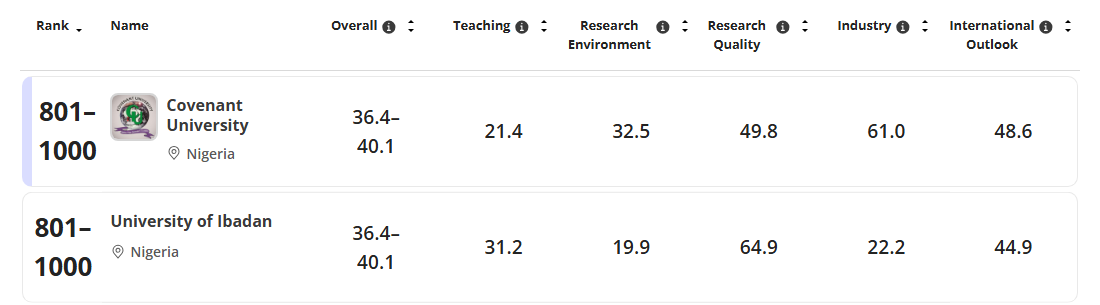
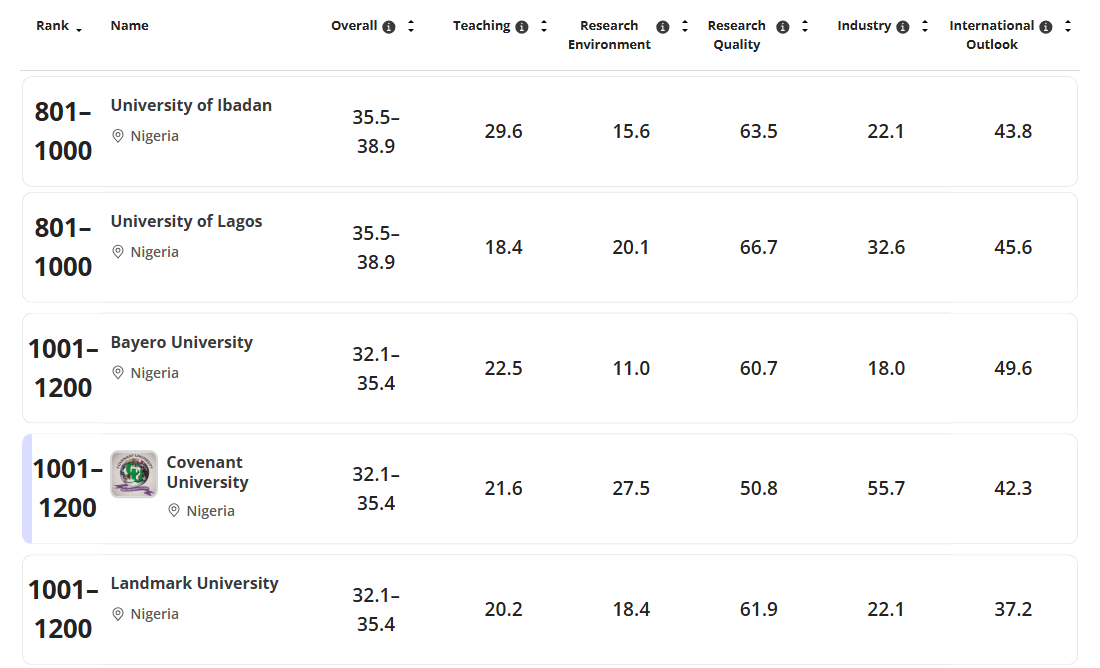
The 2026 table shows where the third place came from. There, the University of Ibadan and the University of Lagos were the only Nigerian entries in the 801 to 1000 band, and Covenant University stood at 1001 to 1200 with Bayero University and Landmark University. In 2026 the 24 ranked Nigerian universities were spread as two at 801 to 1000, three at 1001 to 1200, five at 1201 to 1500 and 14 at 1501 and below, which also adds up to 24.
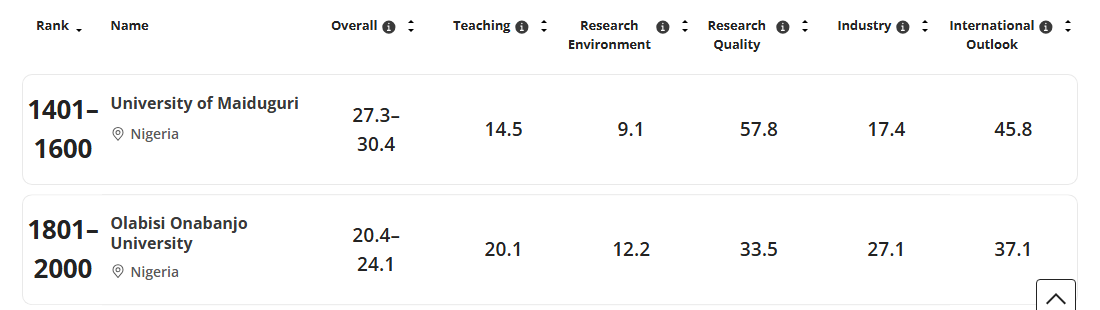
The second claim is weaker. The five universities added in 2027 are all public institutions: Maiduguri and Michael Okpara University of Agriculture are federal universities, and Olabisi Onabanjo, Osun State and Kwara State universities are owned by state governments. Their 2027 bands are 1201 to 1400 for Osun State University, 1401 to 1600 for Maiduguri, 1801 to 2000 for Olabisi Onabanjo, and 2001 and below for Kwara State University and Michael Okpara. The three private universities in the 2027 Nigerian list, Covenant, Landmark and Babcock, were all already ranked in 2026. On the publisher's data, none of the five new entries is private.
The growth also has to be set against the size of the table. The 2026 dataset lists 2,191 ranked institutions and the 2027 dataset 2,297, an increase of 106. Nigeria's 24 were 1.10 per cent of the 2026 table; its 29 are 1.26 per cent of the 2027 one. The country's share rose, but by less than the jump from 24 to 29 alone suggests.
Movement between the two years is hard to measure for most of the list, because THE changed its bands below 1,200. The 2026 edition grouped universities at 1201 to 1500 and 1501 and below; the 2027 edition uses bands of 200 places down to 2000 and then 2001 and below. Of the 24 universities ranked in both years, Covenant, Ahmadu Bello and the University of Ilorin moved into a higher band on any reading, while the 14 that sat at 1501 and below in 2026 are now spread from 1201 to 1400 down to 2001 and below. Several, including the University of Port Harcourt and Ekiti State University, sit in the lowest 2027 band.
Prof Piwuna also compared Nigeria with Pakistan, saying he had read that "about 49 universities in Pakistan made it into the THE". The publisher's data give Pakistan 48 ranked universities in 2026 and 56 in 2027. His figure is close to last year's count, not this year's.
Vero Record has not read the Federal Ministry of Education's statement on the rankings, and so cannot say what figures it used or how it described them. The government's position appears here only as Prof Piwuna characterised it. On the two numbers at the centre of the exchange, the record supports both sides: there are 29 ranked Nigerian universities, as the government is reported to have said, and only three of them are in the top 1,000, as the union says.
What this rests on
The ranking datasets behind the Times Higher Education World University Rankings 2027 and 2026, downloaded from timeshighereducation.com on 8 October 2026 (ranking-dataset.json for 'latest' and for '2026'), and screenshots of the publisher's ranking pages filtered to Nigeria. 2027: 62 Nigerian entries = 29 ranked + 33 'Reporter' (62 - 29 = 33). Ranked by band: 3 (801-1000) + 4 (1001-1200) + 3 (1201-1400) + 6 (1401-1600) + 1 (1601-1800) + 5 (1801-2000) + 7 (2001+) = 29. 2026: 2 (801-1000) + 3 (1001-1200) + 5 (1201-1500) + 14 (1501+) = 24. Matched by THE institution ID: all 24 ranked in 2026 are ranked in 2027; 29 - 24 = 5 new (Maiduguri, Olabisi Onabanjo, Osun State, Kwara State, Michael Okpara). Several names changed between years (for example 'University of Lagos (UNILAG)' to 'University of Lagos', 'University of Nigeria' to 'University of Nigeria Nsukka'), so matching was done on ID, not name. Table size: 2,297 - 2,191 = 106 more ranked institutions. Shares: 24 / 2,191 = 1.095 per cent, rounded 1.10; 29 / 2,297 = 1.263 per cent, rounded 1.26. Pakistan ranked entries: 48 (2026), 56 (2027), counted in the same files. Ownership of the five new entries (federal or state) is from the institutions' public status, not from THE's data. ASUU quotations from Punch, 6 October 2026.
What this does not establish
The Federal Ministry of Education's own statement was not read; what it claimed is known here only through the ASUU president's account. The THE data do not say why the five universities entered the table this year (for example whether they submitted data for the first time or crossed a publication threshold), and the band changes below 1,200 prevent an exact comparison of most institutions' positions between the two years. Nothing here assesses the quality of any university beyond what the published scores show, or the merits of the ranking's methodology.
What we did ourselves
Downloaded both editions' ranking datasets, extracted every Nigerian entry, separated ranked universities from reporters, matched the two years by institution ID to identify the five new entries and confirm there were no exits, re-added the band counts for both years, computed Nigeria's share of each table, and checked the Pakistan figure. Tested the ASUU president's statements against the result.
Sources for this report
(A) Times Higher Education, World University Rankings 2027 and World University Rankings 2026, ranking datasets and ranking pages filtered to Nigeria.
- World University Rankings 2027 · Times Higher Education · 2026
- World University Rankings 2027 ranking dataset · Times Higher Education · 2026
- World University Rankings 2026 ranking dataset · Times Higher Education · 2025
- 29 Nigerian varsities in THE ranking nothing to celebrate, ASUU president · Punch · 2026-10-06
Confidence: high. This is our own assessment of whether the event occurred as described, separate from the grade, which describes what kind of thing the claim rests on.
Not obtained: where the underlying document is named above but not linked, we did not hold a copy at the time of publication. We purchase nothing and request nothing in our own name.
Corrections
None on this report. If you find an error, it will be published here, at the same length, with the date it was found, and the original wording will remain visible above it.

Dr VeroInvestigations editor, Vero Record
Reads the Nigerian public record that others leave unread: budgets, audit reports, court files and registers. Every claim on this page carries the grade of the document behind it, and the report says what that document does not establish.
All 101 reportsHow we grade evidenceAdd Vero Record as a preferred source on Google