Kogi's 2025 budget has three final totals in its own records: N604.53bn in the budget report, N406.32bn and N370.49bn in the audited accounts
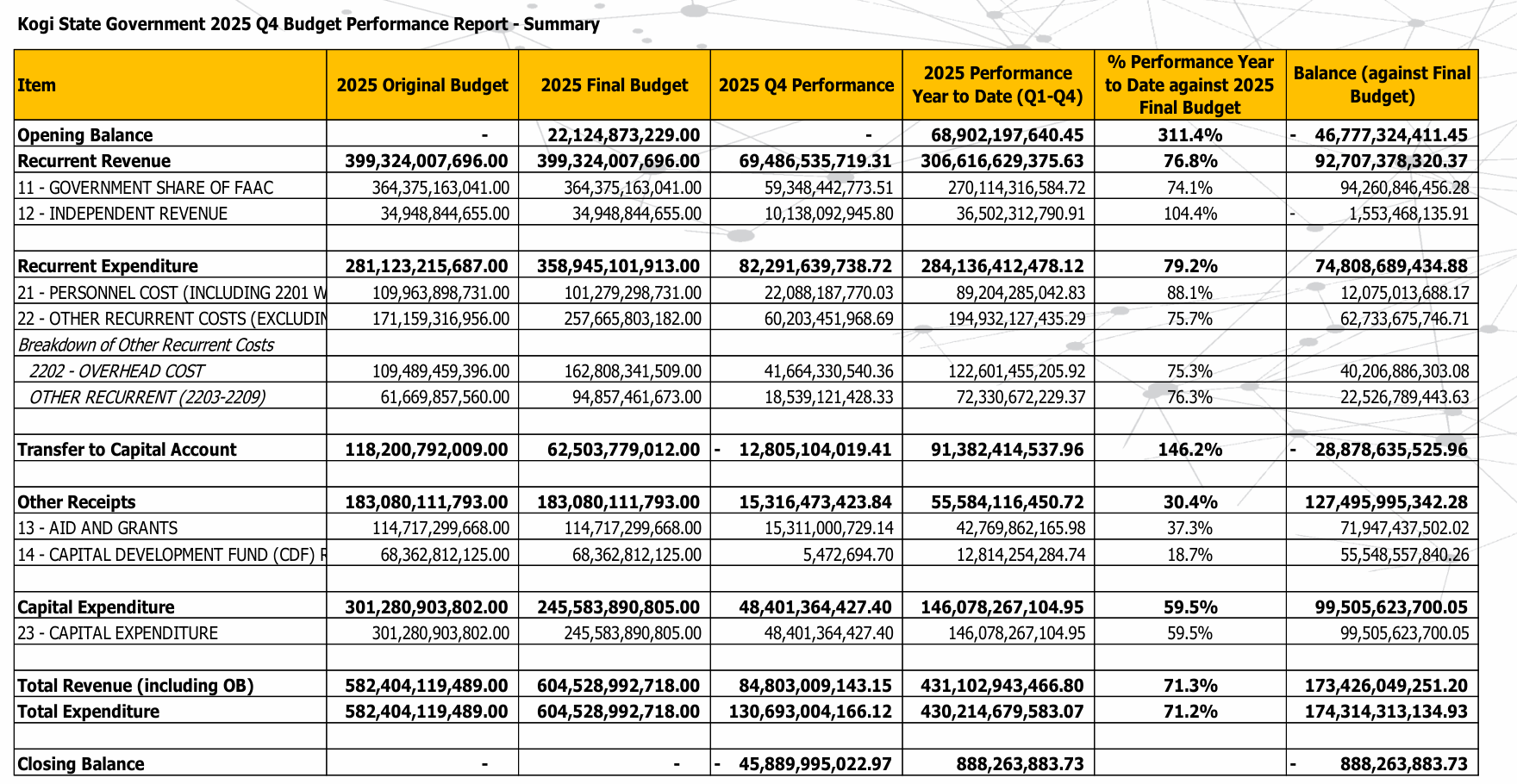
The Kogi State Appropriation Law, 2025 authorised N582,404,119,489. The state's fourth-quarter budget report says the final budget grew to N604,528,992,718. Its audited financial statements, certified by the Auditor-General in July, describe a revised budget of N406,321,130,013 in one place and a final expenditure budget of N370,490,039,597 in another. Whether the state spent 71.2 per cent of its budget or 100.07 per cent depends on which of its documents a reader opens.
Kogi State's own records give its 2025 budget three different final sizes. The budget implementation report for the fourth quarter, produced by the Ministry of Finance, Budget and Economic Planning and posted on the state's website on 27 January 2026, puts the final 2025 budget at N604,528,992,718. The audited financial statements for the same year, signed by the Accountant-General, Habibat O. Tijjani, on 15 June 2026 and certified by the Auditor-General, Y. Y. Okala, on 17 July 2026, give the revised budget as N406,321,130,013 in their narrative section and the final expenditure budget as N370,490,039,597 in the statement that sets the budget against actual spending. The highest and lowest of the three are N234,038,953,121 apart.
The starting point is not in dispute. Section 4(2) of the Kogi State Appropriation Law, 2025 appropriates "The total sum of N582,404,119,489.00" from the Consolidated Revenue Fund for the year ending 31 December 2025, and section 5(2) divides it into N281,123,215,687 for recurrent expenditure and N301,280,903,802 for capital expenditure, which add to the total. According to the audited statements, Governor Ahmed Usman Ododo presented the bill on 3 December 2024, the House of Assembly passed it on 23 December and he assented on 30 December 2024. Both the budget report and the audited statements repeat N582,404,119,489 as the original budget.
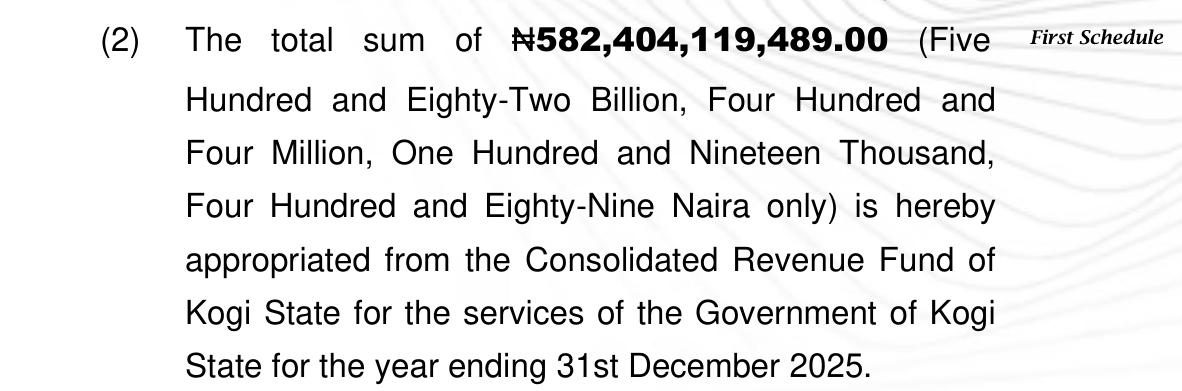
Table 1 of the budget report, on page 14, moves from there to a final budget of N604,528,992,718 on both the revenue and the expenditure side. The rise, N22,124,873,229, is the same as the opening balance the table adds to revenue in its final-budget column. Within the total, recurrent expenditure rises from N281,123,215,687 to N358,945,101,913 (personnel N101,279,298,731 and other recurrent costs N257,665,803,182) and capital expenditure falls from N301,280,903,802 to N245,583,890,805; 358,945,101,913 + 245,583,890,805 = 604,528,992,718. Against that final budget, the report records spending of N430,214,679,583.07 for the year, or 71.2 per cent, and capital spending of N146,078,267,104.95, or 59.5 per cent.
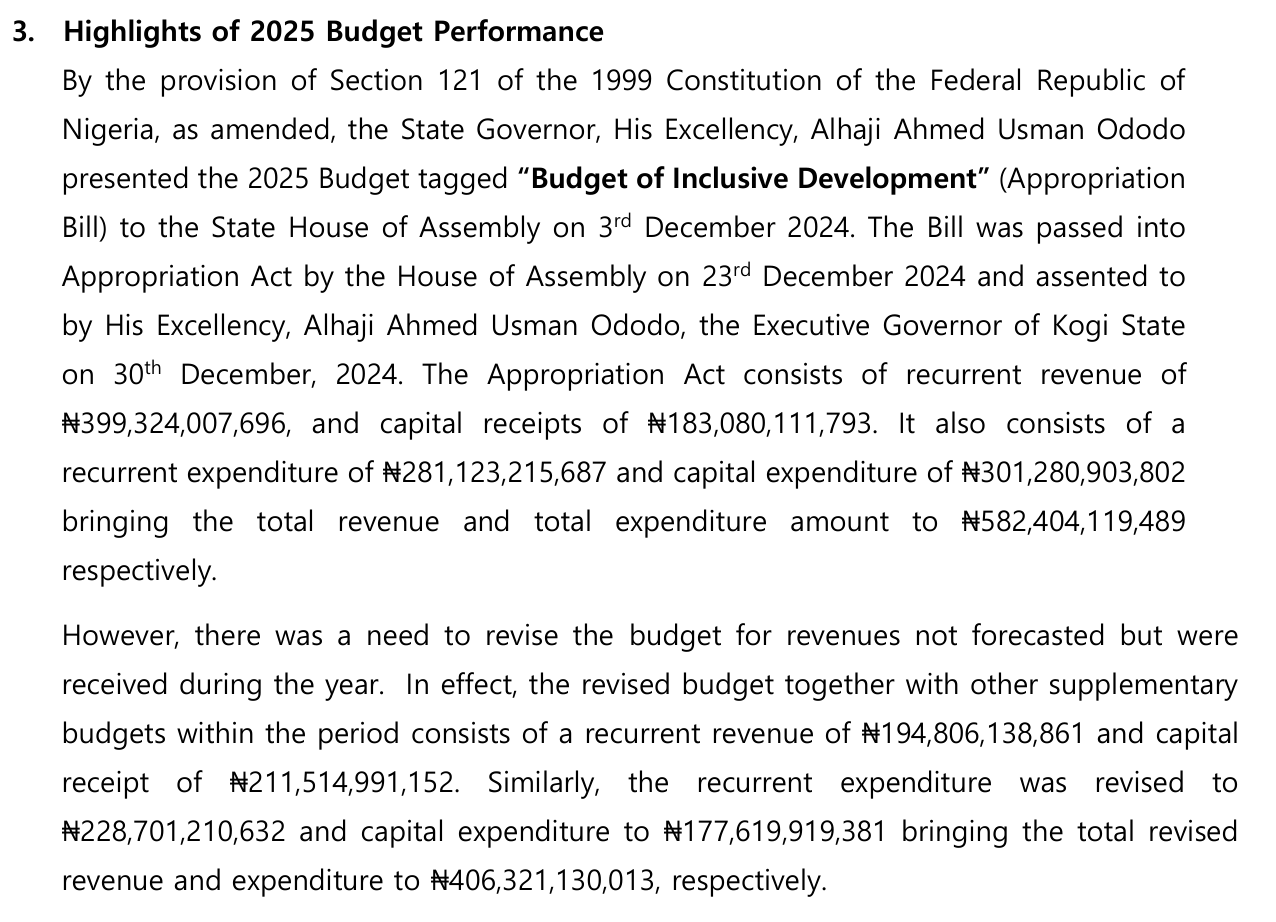
The audited statements describe the same year differently. Page 41, under "Highlights of 2025 Budget Performance", says: "However, there was a need to revise the budget for revenues not forecasted but were received during the year." It then gives the revised budget, "together with other supplementary budgets within the period", as recurrent revenue of N194,806,138,861 and capital receipts of N211,514,991,152, against recurrent expenditure of N228,701,210,632 and capital expenditure of N177,619,919,381, "bringing the total revised revenue and expenditure to N406,321,130,013". The parts add up. But the revised total is N176,082,989,476, or 30.23 per cent, below the Appropriation Law, although the sentence before it explains the revision by revenue that had not been forecast. The revised recurrent revenue of N194,806,138,861 is also lower than the N252,360,823,512 of recurrent revenue the same accounts record as received (page 11), and lower than the N306,616,629,375.63 the budget report records.
The statement of comparison of budget to actual on pages 11 and 12, which the accounts present under the international public sector standard on budget reporting, IPSAS 24, uses a third set of figures. Its "Original Budget" column gives total expenditure of N436,012,425,491 and total receipts of N383,736,081,958; its "Final Budget" column gives N370,490,039,597 and N385,736,081,958. The original figure in this statement is N146,391,693,998 below the N582,404,119,489 in the Appropriation Law, and unlike the law, its receipts and expenditure do not balance. Actual expenditure in the statement is N370,732,160,802, which is 100.07 per cent of its final budget, an overspend of N242,121,205.
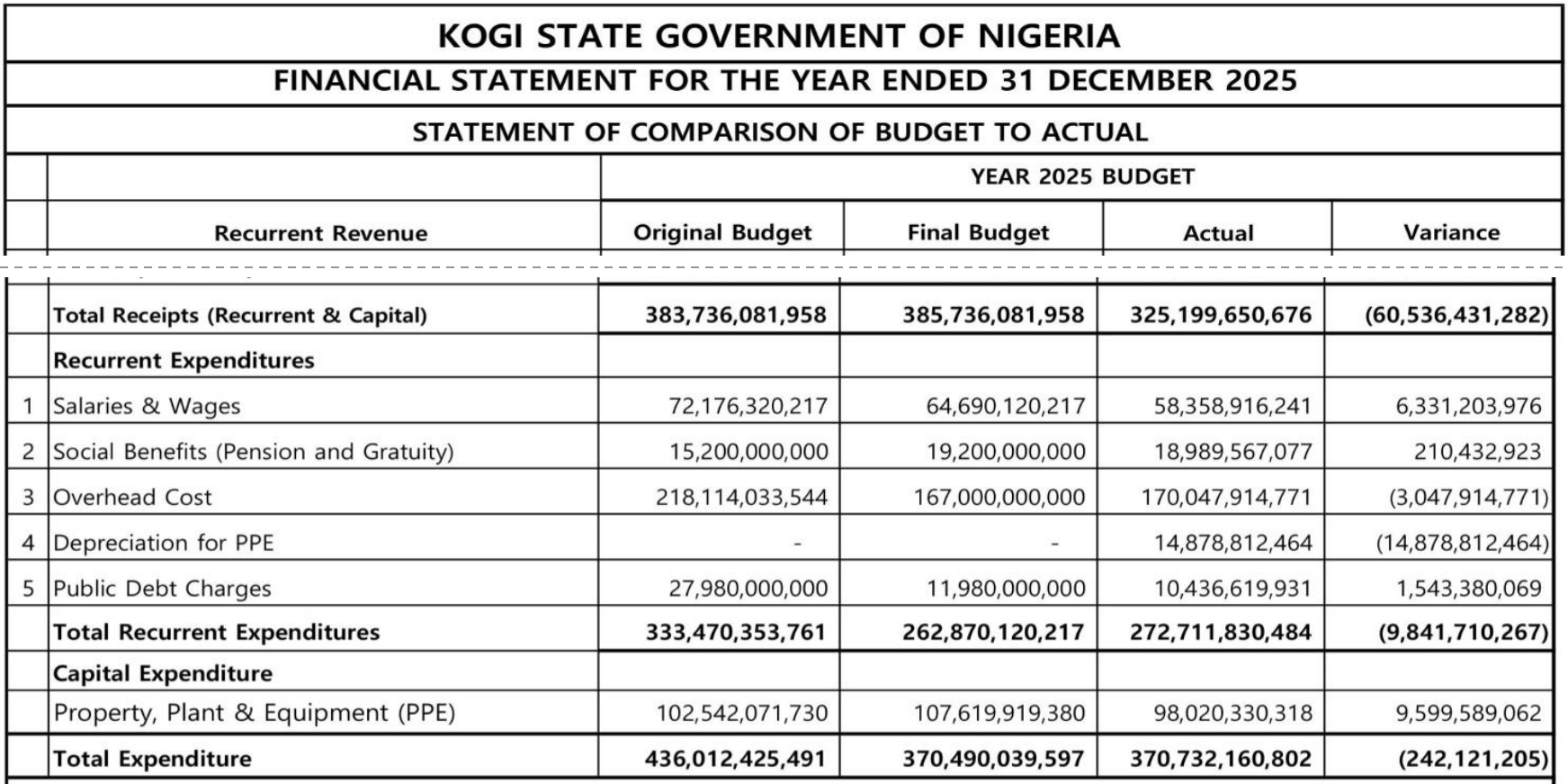
Capital spending shows the spread most clearly. The law provides N301,280,903,802. The budget report's final figure is N245,583,890,805. The narrative on page 41 of the audited statements gives N177,619,919,381, and the comparison statement on page 12 gives N107,619,919,380 for property, plant and equipment, with N102,542,071,730 as the original provision. The difference between the last two audited figures is N70,000,000,001, one naira more than N70 billion. On the actual side, the budget report records N146,078,267,104.95 of capital expenditure and the audited statements N98,020,330,318 of property, plant and equipment, the same figure their cash flow statement on page 8 gives for purchase, construction and rehabilitation of property, plant and equipment. The gap is N48,057,936,786.95.
Part of that gap may have a technical explanation, and the documents hint at it. The budget report counts everything coded as capital in the national chart of accounts, while accrual accounts record as an asset only spending that creates one and treat the rest as an expense. The comparison statement's original overhead budget, N218,114,033,544, is N108,624,574,148 higher than the N109,489,459,396 the budget report gives for overhead in the original budget, which suggests that some capital lines were moved into overhead. The statements do not set out such a reclassification, and moving lines between headings would not account for the N146,391,693,998 by which the statement's original total falls short of the law.
The audited statements also differ from themselves on revenue. The statement of financial performance on page 6 gives budgeted revenue of N385,793,027,458 in both its original and final columns, N2,056,945,500 more than the original receipts on page 12 and N56,945,500 more than the final receipts there. The same page has a column headed "Supplementary Budget", and every entry in it is a dash, although the narrative on page 41 refers to "other supplementary budgets within the period". A search of the media library on the state government's website for "revised" and "supplementary" returned a revised 2026 budget but no revised or supplementary budget for 2025.
The Auditor-General's certificate on page 5 states: "In my opinion the Financial Statements agree with the books of accounts and records and give a true and fair view of the Financial Position of the Government of Kogi State for the year ended 31 December 2025, and the transactions for the fiscal year ended on that date." The opinion concerns the financial position and the year's transactions. It does not comment on the budget figures, and it does not mention the differences set out here.
On several points the records support the state. The Appropriation Law, the budget report and the narrative of the audited statements give the same original total, N582,404,119,489, and the same split between recurrent and capital spending. Internally generated revenue agrees closely: the budget report records N36,502,312,790.91, and the audited statements record tax revenue of N28,786,488,142 and non-tax revenue of N7,715,601,649, which add to N36,502,089,791, a difference of N222,999.91. Kogi published its fourth-quarter report within a month of the year's end and its audited accounts, with the Auditor-General's certificate, within seven months. The actual totals in the two documents are not expected to match: the budget report is kept on a cash basis, while the audited statements are on an accrual basis and include, for example, N14,878,812,464 of depreciation.
The budget columns are another matter. A budget is not a measurement but a figure that someone authorised, and the three documents give three different authorised figures for the same year and the same law. The choice decides how the year reads. Against the budget report's final budget, Kogi spent 71.2 per cent of its 2025 budget; against the Appropriation Law, the same N430,214,679,583.07 is 73.87 per cent; against the audited statement's final budget, the audited spending of N370,732,160,802 is 100.07 per cent.
The documents do not say which revised budget, if any, the Kogi State House of Assembly approved, or why the audited statements give two different revised figures. Vero Record did not ask the Ministry of Finance, Budget and Economic Planning, the Accountant-General or the Auditor-General for comment before publication; the figures above are the state's own, set against each other. Nothing in them suggests that money was lost or misused, and no such claim is made.
What this rests on
Three documents downloaded from kogistate.gov.ng on 30 October 2026 and read for this report: the Kogi State Appropriation Law, 2025 (19 pages; sections 4 and 5 and the First Schedule); the Kogi State 2025 Q4 Budget Implementation Report (83 pages, file created 27 January 2026; Table 1 on printed page 14 and the summary tables on printed pages 3 to 11); and the Kogi State Government Audited Financial Statements for the year ended 31 December 2025 (276 pages, file created 31 July 2026; Auditor-General's certificate pages 4 and 5, statement of financial performance page 6, statement of comparison of budget to actual pages 11 and 12, cash flow statement page 8, narrative pages 41 to 45, notes pages 46 to 61 viewed). The statements are scanned; figures were read from rendered pages, not from OCR. Arithmetic re-done: law 281,123,215,687 + 301,280,903,802 = 582,404,119,489 and 399,324,007,696 + 183,080,111,793 = 582,404,119,489; budget report final 101,279,298,731 + 257,665,803,182 = 358,945,101,913, and 358,945,101,913 + 245,583,890,805 = 604,528,992,718; revenue side 22,124,873,229 + 399,324,007,696 + 183,080,111,793 = 604,528,992,718; 604,528,992,718 - 582,404,119,489 = 22,124,873,229 (the opening balance); actual 284,136,412,478.12 + 146,078,267,104.95 = 430,214,679,583.07, and 430,214,679,583.07 / 604,528,992,718 = 71.17 per cent (printed 71.2), / 582,404,119,489 = 73.87 per cent; audited narrative 194,806,138,861 + 211,514,991,152 = 406,321,130,013 and 228,701,210,632 + 177,619,919,381 = 406,321,130,013; 582,404,119,489 - 406,321,130,013 = 176,082,989,476 (30.23 per cent); comparison statement original 333,470,353,761 + 102,542,071,730 = 436,012,425,491, final 262,870,120,217 + 107,619,919,380 = 370,490,039,597, actual 272,711,830,484 + 98,020,330,318 = 370,732,160,802; 370,732,160,802 / 370,490,039,597 = 100.07 per cent, overspend 242,121,205; 582,404,119,489 - 436,012,425,491 = 146,391,693,998; 604,528,992,718 - 370,490,039,597 = 234,038,953,121; 604,528,992,718 - 406,321,130,013 = 198,207,862,705; capital 177,619,919,381 - 107,619,919,380 = 70,000,000,001; 146,078,267,104.95 - 98,020,330,318 = 48,057,936,786.95; overhead 218,114,033,544 - 109,489,459,396 = 108,624,574,148; page 6 revenue 385,793,027,458 - 383,736,081,958 = 2,056,945,500 and 385,793,027,458 - 385,736,081,958 = 56,945,500; page 6 original expenditure 305,490,353,761 + 27,980,000,000 = 333,470,353,761, matching page 12; IGR 28,786,488,142 + 7,715,601,649 = 36,502,089,791 against 36,502,312,790.91, difference 222,999.91. The audited statements print amounts with the naira sign in column headings and text; all figures here are in naira as printed.
What this does not establish
Which revised budget, if any, the Kogi State House of Assembly approved for 2025, and whether a supplementary appropriation law exists; none was found in the state website's media library under 'revised' or 'supplementary', but that search does not prove none was passed. Why the audited statements give a revised total of N406,321,130,013 in their narrative and N370,490,039,597 in their comparison statement, why the comparison statement's original budget is N436,012,425,491 rather than the N582,404,119,489 of the law, or how the budget lines were mapped from the cash-based chart of accounts to the accrual statement. Pages 62 to 276 of the scanned statements (later notes and schedules) were not read in full, and a reconciliation could appear there. How much of the N48,057,936,786.95 gap in capital spending is reclassification of capital-coded items as expenses. Nothing in the documents suggests that public money was lost or misused, and none is alleged. The Ministry of Finance, Budget and Economic Planning, the Accountant-General and the Auditor-General were not asked for comment.
What we did ourselves
Found the state's 2025 audited statements and fourth-quarter budget report through the media library of kogistate.gov.ng, downloaded them with the 2025 Appropriation Law, and set the budget columns of the three documents against each other line by line. Read the scanned audited statements from rendered page images. Re-added every total, traced the budget report's increase to its opening balance, compared the capital provisions across all four budget figures, and recomputed the performance rates against each of the competing budgets.
Sources for this report
(A) Kogi State Appropriation Law, 2025, sections 4(2) and 5(2); Kogi State 2025 Q4 Budget Implementation Report, Table 1 (p.14); Kogi State Government Audited Financial Statements for the year ended 31 December 2025, Auditor-General's certificate (pp.4 to 5), statement of financial performance (p.6), statement of comparison of budget to actual (pp.11 to 12), Highlights of 2025 Budget Performance (p.41).
- Kogi State Government Audited Financial Statements for the year ended 31 December 2025 (276 pages) · Kogi State Government, Office of the Accountant-General · July 2026
- Kogi State 2025 Q4 Budget Implementation Report (83 pages) · Kogi State Ministry of Finance, Budget and Economic Planning · January 2026
- Kogi State Appropriation Law, 2025 · Kogi State House of Assembly · 30 December 2024
Confidence: high. This is our own assessment of whether the event occurred as described, separate from the grade, which describes what kind of thing the claim rests on.
Not obtained: where the underlying document is named above but not linked, we did not hold a copy at the time of publication. We purchase nothing and request nothing in our own name.
Corrections
None on this report. If you find an error, it will be published here, at the same length, with the date it was found, and the original wording will remain visible above it.
Dr VeroInvestigations editor, Vero Record
Reads the Nigerian public record that others leave unread: budgets, audit reports, court files and registers. Every claim on this page carries the grade of the document behind it, and the report says what that document does not establish.
All 154 reportsHow we grade evidenceAdd Vero Record as a preferred source on Google