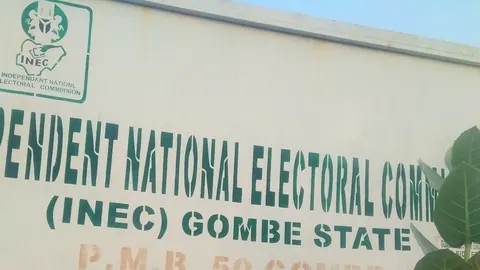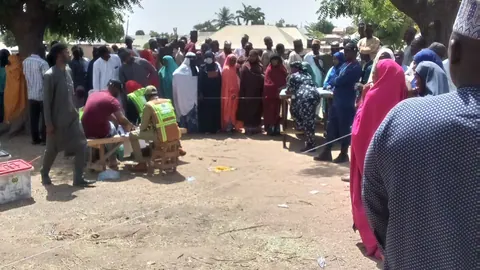
Amupitan praised the "timely release" of INEC's funds. The Electoral Act's deadline for 2027 election money was 16 July; 82 days on he sought the rest
At INEC's 100-day briefing on 6 October, Professor Joash Amupitan thanked the federal government for "the timely release of statutory budgetary allocations" and asked, in the same address, for "the prompt release of the remaining budget". Section 3(3) of the Electoral Act 2026 says election funds due to the Commission shall be released not later than six months before the general election. INEC's own signed timetable puts that election on 16 January 2027, which makes the deadline 16 July 2026. On INEC's account, part of the money was still outstanding 82 days after it. The record also shows that more than half arrived before the deadline, and that the 2026 Act had already given the government 146 more days than the law it replaced.
On Tuesday, 6 October 2026, at a press conference in Abuja marking 100 days to the general election, the chairman of the Independent National Electoral Commission, Professor Joash Amupitan, thanked the federal government for what he called "the timely release of statutory budgetary allocations to the Commission". In the same address he said: "However, we expect the prompt release of the remaining budget to ensure seamless execution of the remaining activities." The Electoral Act 2026 fixes a date for that money. Section 3(3) says the election funds due to the Commission "shall be released to the Commission not later than 6 months before the next general election". INEC's own timetable sets the presidential and National Assembly elections for 16 January 2027, so the date was 16 July 2026. Mr Amupitan's request for the rest of the budget came 82 days after it.
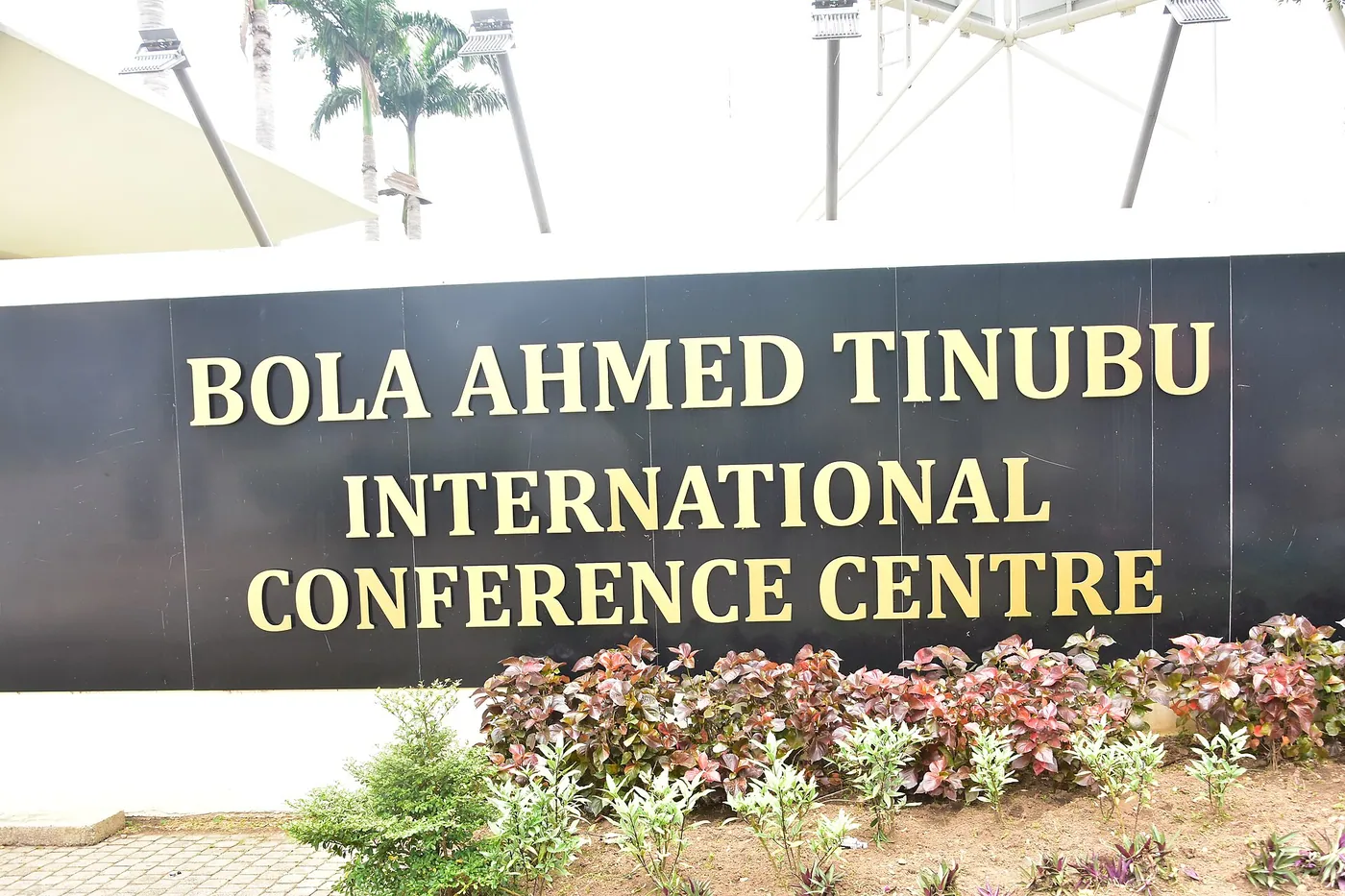
The chairman's words are taken from ARISE News's report of the briefing, published on 7 October, which quotes the passage at length: "The federal government has maintained its commitment to democratic governance through the timely release of statutory budgetary allocations to the Commission. Operating under a framework of transparent fiscal management, these funds have enabled us to meet international vendor obligations, finance the production of critical election technology, upgrade physical infrastructure, and sustain multi-stakeholder operational deployments nationwide." The briefing was held at the Bola Ahmed Tinubu International Conference Centre. Vero Record did not obtain a transcript or recording published by INEC itself, and the report does not say how much money had been released or how much was still owed.
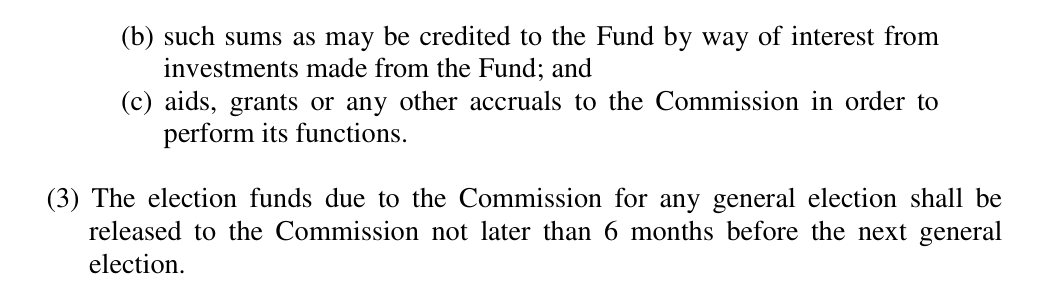
Vero Record read section 3 in INEC's copy of the Electoral Act 2026. It establishes the Independent National Electoral Commission Fund, lists what is paid into it, and then sets the deadline in subsection (3), on page 9 of the document. The subsection does not define "election funds due", does not say whether a part payment meets it, and attaches no penalty or remedy if the date is missed. Six calendar months before Saturday, 16 January 2027 is Thursday, 16 July 2026, which is 184 days before polling day. Press reports of INEC's own briefings used the same date: a New Telegraph report of 26 June 2026 on a briefing by National Commissioner Mohammed Haruna states that "the deadline falls on July 16, 2026".
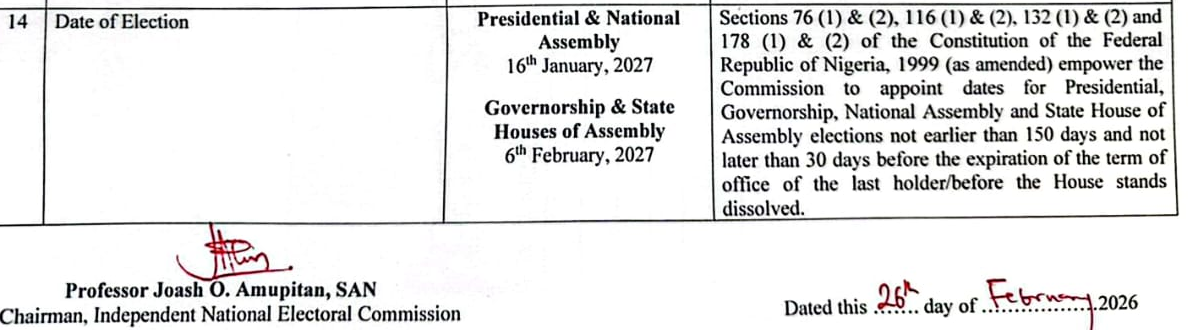
The polling date comes from INEC's own paper. The Revised Timetable and Schedule of Activities for the 2027 General Election, signed by Professor Amupitan and dated 26 February 2026, lists 14 activities. Item 14, "Date of Election", gives 16 January 2027 for the presidential and National Assembly elections and 6 February 2027 for the governorship and State Houses of Assembly elections. Counting from the first of those dates, the 6 October briefing fell 102 days before the poll.
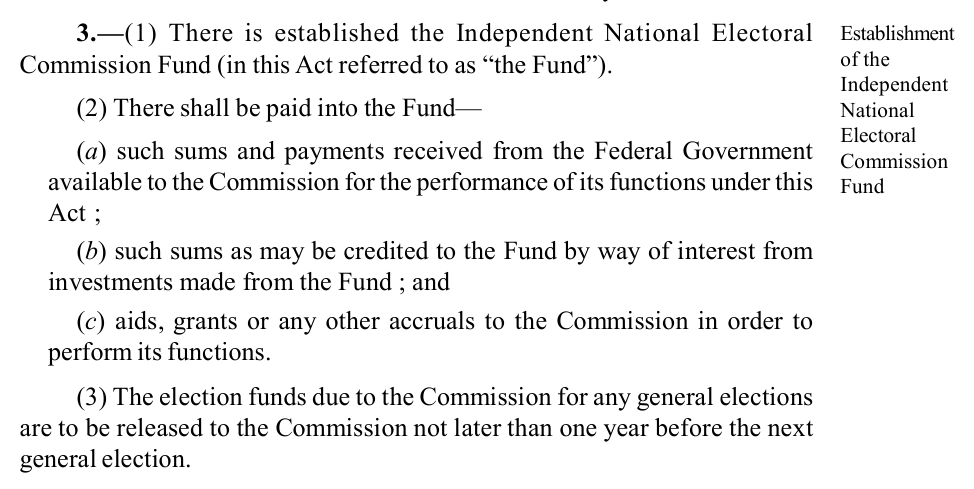
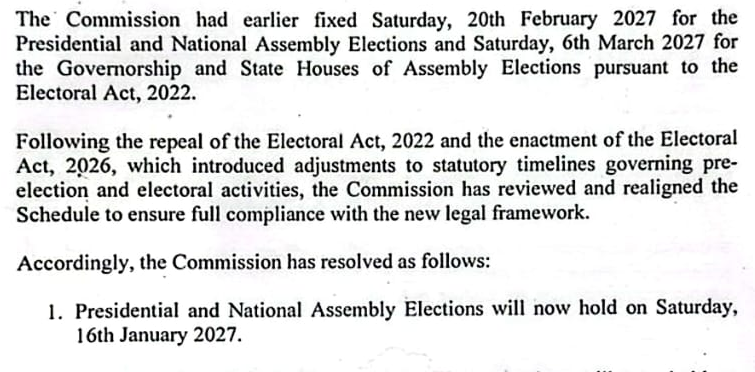
The law that applied before February was stricter. Section 3(3) of the Electoral Act 2022, as published in the Official Gazette of 29 March 2022, says the election funds "are to be released to the Commission not later than one year before the next general election". INEC's press release of 26 February 2026 records that the Commission "had earlier fixed Saturday, 20th February 2027" for the presidential and National Assembly elections under that Act. On the old law and the old date, the funds were due by 20 February 2026. INEC presented its 2027 election budget proposal of N873.78 billion to the National Assembly's joint committee on electoral matters on 12 February 2026, according to reports of that hearing, eight days before that date. The 2026 Act cut the period to six months and the election moved forward to 16 January, so the deadline moved to 16 July 2026. That is 146 days later than the deadline it replaced.
INEC watched the new date approach. The New Telegraph report of 26 June says Mr Haruna, who chairs INEC's Information and Voter Education Committee, "expressed concern over the delay in releasing election funds" at a closed-door session with journalists, and that "Although the legal timeline has not yet elapsed, Haruna cautioned that waiting until the final deadline could hamper procurement and other critical preparations." The same report quotes him defending the proposal: "This N800 billion-plus sounds humongous, but when you calculate the average cost per voter, it is about six dollars per voter, which is reasonable for a country like Nigeria."
A week later the position had changed. In an interview with ARISE News, published on Saturday 4 July and described as given on the Friday, Mr Haruna said: "Where we are now is that we've received more than half the fund", putting it at "More than 50% of it", and "I think it was in this month that the first 500 billion was released, a week or two weeks ago". ARISE summarised this as "more than N500 billion, representing over 50 per cent of the funds budgeted". On his account, therefore, more than half the budget reached INEC before 16 July; read with the New Telegraph report, the release came between late June and early July. The 6 October statement shows that the release was not complete by that date, and that INEC still regarded a balance as owed 82 days after it.
The size of that balance is not in any document Vero Record could obtain. If the budget was the N873.78 billion INEC proposed and the first release was N500 billion, the balance would have been N373.78 billion; Mr Haruna said "more than" N500 billion, so on those figures it would have been somewhat less. Both numbers are working assumptions. Reports of the National Assembly's handling of the proposal mention a committee recommendation to add N30 billion, and Vero Record did not find the final appropriated sum. The copy of the 2026 Appropriation Act held by Vero Record contains the ministries' detailed estimates; INEC's money is a statutory transfer that does not appear in it as a line.
On the chairman's own words, the record supports him in part. More than half of the election money reached INEC before the legal deadline, if Mr Haruna's account is right, and Mr Amupitan said the releases had allowed INEC to pay foreign vendors and fund election technology. His phrase "statutory budgetary allocations" may also refer to INEC's regular annual statutory transfer, which is separate from election funds; Vero Record could not test whether those payments were on time. What the record does not support is a reading of "timely" that covers the 2027 election budget as a whole: section 3(3) speaks of the election funds due, and INEC said on 6 October that the remainder had not yet arrived.
The schedule INEC set out at the same briefing shows what the remaining money is for. According to the ARISE report, the chairman said procurement "had moved to execution for 57,000 new BVAS devices, ballot boxes, cubicles, operational vehicles", that a six-day stress test of the technology would run from 23 to 28 October and a nationwide mock accreditation in November, and that INEC would need 707,384 ad hoc staff for each of the two election days, 1,414,768 engagements in all. Item 11 of the signed timetable has the official register of voters published on 15 December 2026 and item 12 the notice of poll on 29 December 2026. Mr Haruna's June warning was that late funding "could hamper procurement".
These documents do not show that any official broke the law, and no court has considered the question. Section 3(3) names no person or office responsible for the release and sets no consequence. They also do not show when, or whether, the balance was paid after 6 October, how much it was, or whether any of it was held back pending appropriation. What they do show is a date fixed by statute, a polling day fixed by INEC's own signature, and INEC's own statement, 82 days after that date, that part of the 2027 election budget was still to come.
What this rests on
Electoral Act 2026 (INEC copy, inecnigeria.org/documents/Electoral-Act-2026.pdf), section 3(3), PDF page 9: "The election funds due to the Commission for any general election shall be released to the Commission not later than 6 months before the next general election." Electoral Act 2022 (Official Gazette No. 61, Vol. 109, 29 March 2022), section 3(3), page A359 (PDF page 9): "not later than one year before the next general election". INEC Revised Timetable and Schedule of Activities for the 2027 General Election, signed by Prof. Joash O. Amupitan, dated 26 February 2026, page 3, items 11, 12 and 14; INEC press release of the same date, page 1 (earlier date 20 February 2027; new date 16 January 2027). All read for this report. Day counts (calendar days): 16 July 2026 to 6 October 2026 = 15 (17 to 31 July) + 31 (August) + 30 (September) + 6 = 82. 16 July 2026 to 16 January 2027 = 15 + 31 + 30 + 31 + 30 + 31 + 16 = 184. 6 October 2026 to 16 January 2027 = 25 + 30 + 31 + 16 = 102. 20 February 2026 to 16 July 2026 = 8 (21 to 28 February) + 31 + 30 + 31 + 30 + 16 = 146. 12 February 2026 to 20 February 2026 = 8. 26 June 2026 to 16 July 2026 = 4 + 16 = 20 (New Telegraph wrote "Barely 21 days"). Six calendar months before 16 January 2027 = 16 July 2026; one year before 20 February 2027 = 20 February 2026. Weekdays: 6 October 2026 Tuesday; 16 January 2027 Saturday; 4 July 2026 Saturday, so "Friday" is 3 July. Illustrative balance (assumption, not a document figure): N873.78bn - N500bn = N373.78bn; half of N873.78bn = N436.89bn, consistent with "more than N500 billion" being over half. Ad hoc staff as reported: 707,384 x 2 = 1,414,768; 707,384 / 176,846 polling units = 4.0.
What this does not establish
The amount appropriated for the 2027 general election, and whether it equals the N873.78 billion INEC proposed; the statutory transfer schedule of the 2026 Appropriation Act was not obtained. The exact sum and date of the first release; the only source is Mr Haruna's interview, which says "more than" N500 billion and "a week or two weeks ago". How much was outstanding on 6 October, and whether any has been paid since. Whether "statutory budgetary allocations" in Mr Amupitan's address meant INEC's regular statutory transfer or the election funds. Mr Amupitan's words were not checked against an INEC transcript or recording. Whether any part of the balance was not yet "due" in the sense of section 3(3), for example because it awaited appropriation. The date the Electoral Act 2026 was signed; this report relies on INEC's 26 February 2026 documents, which treat it as in force. Mr Haruna's six dollars per voter was not tested. Nothing in this report suggests wrongdoing by any person; section 3(3) names no responsible officer and sets no sanction, and no court has ruled on it.
What we did ourselves
Took Professor Amupitan's words from the ARISE News report of the 6 October briefing and Mr Haruna's from the New Telegraph report of 26 June and the ARISE interview published on 4 July, and saved all three pages. Read section 3 of both the 2026 and the 2022 Electoral Acts and set the two release deadlines side by side. Took the polling dates, old and new, from INEC's own signed timetable and press release, worked out both statutory deadlines from them, and counted the days between each deadline, the June and July statements, and the 6 October request. Checked the 2026 Appropriation Act details held on file for an INEC election line and found none.
Sources for this report
(A) Electoral Act 2026, section 3(3) (INEC copy); Electoral Act 2022, section 3(3) (Official Gazette No. 61, Vol. 109, 29 March 2022); INEC Revised Timetable and Schedule of Activities for the 2027 General Election and accompanying press release, both dated 26 February 2026.
- INEC seeks release of outstanding funds 100 days to 2027 elections · ARISE News · 7 October 2026
- Electoral Act 2026 · National Assembly (INEC copy) · 2026
- Electoral Act 2022 (Official Gazette No. 61, Vol. 109) · Federal Republic of Nigeria (INEC copy) · 29 March 2022
- Revised Timetable and Schedule of Activities for 2027 General Election (signed pages) · Independent National Electoral Commission · 26 February 2026
- Issuance of Revised Timetable and Schedule of Activities for the 2027 General Election (press release) · Independent National Electoral Commission · 26 February 2026
- We're Yet To Receive 2027 Election Funds As Legal Deadline Nears: INEC · New Telegraph · 26 June 2026
- Mohammed Haruna: INEC has received over N500bn for 2027 general elections · ARISE News · 4 July 2026
- INEC proposes N873.78bn for 2027 elections · AllAfrica (syndicated report) · 12 February 2026
Confidence: high. This is our own assessment of whether the event occurred as described, separate from the grade, which describes what kind of thing the claim rests on.
Not obtained: where the underlying document is named above but not linked, we did not hold a copy at the time of publication. We purchase nothing and request nothing in our own name.
Corrections
None on this report. If you find an error, it will be published here, at the same length, with the date it was found, and the original wording will remain visible above it.
Dr VeroInvestigations editor, Vero Record
Reads the Nigerian public record that others leave unread: budgets, audit reports, court files and registers. Every claim on this page carries the grade of the document behind it, and the report says what that document does not establish.
All 151 reportsHow we grade evidenceAdd Vero Record as a preferred source on Google