
Before the World Bank's $500m top-up for ACReSAL, its own report cut the project's main land figure by 250,960 hectares
The first of the three $500 million World Bank credits reported on 28 September goes to the board on 29 October. It would add money to the northern land-restoration project ACReSAL. In June the Bank's own progress report for that project cut its main land figure from 799,868.76 hectares to 548,908, after a mid-term review tightened how land is counted.
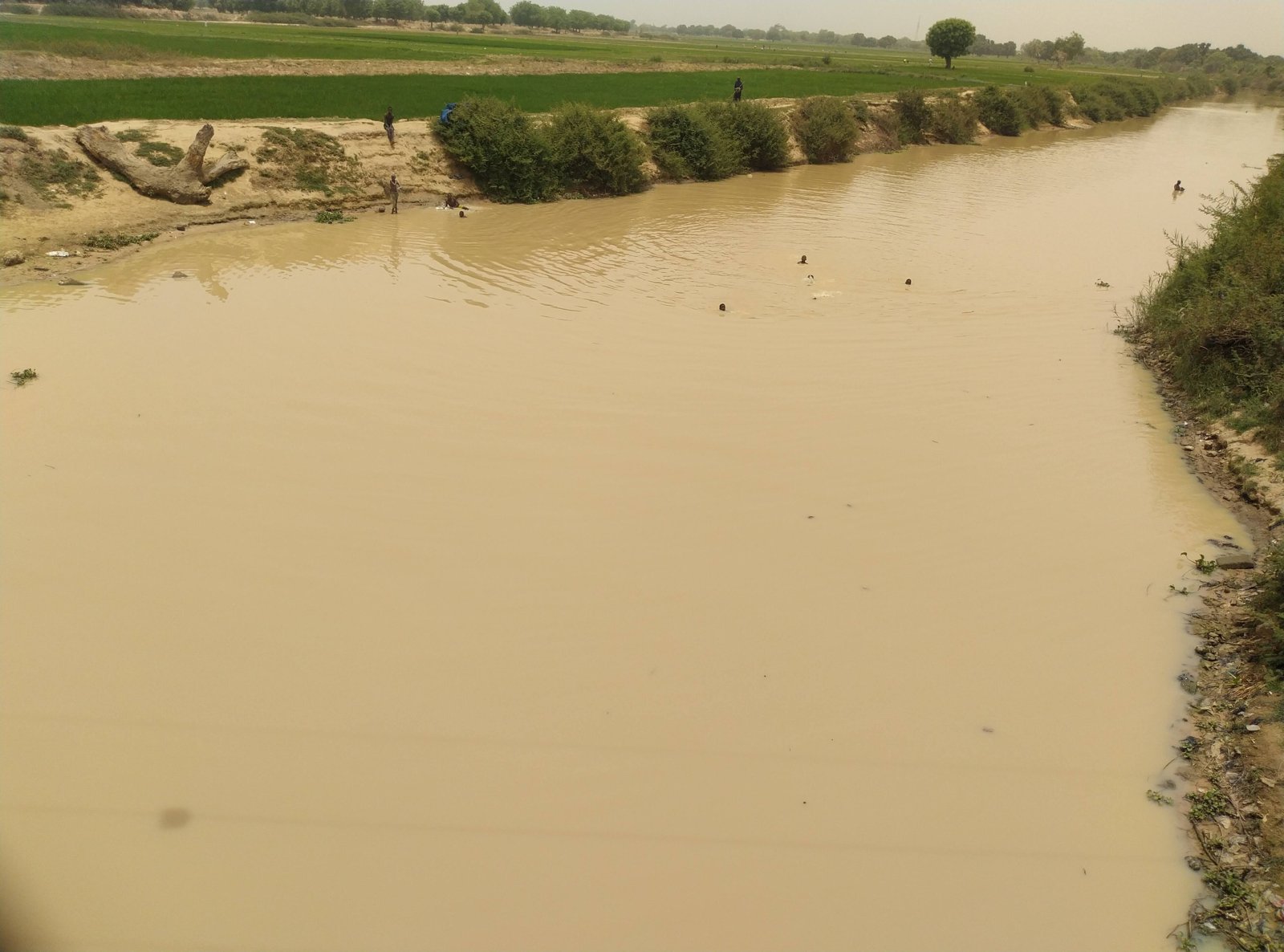
On 28 September several Nigerian outlets, including Nairametrics, TheCable and the Guardian, reported that the Federal Government was seeking US$1.5 billion in new World Bank credit. According to those reports the money comes as three separate US$500 million credits from the International Development Association (IDA): additional financing for the Agro-Climatic Resilience in Semi-Arid Landscapes project (ACReSAL), a Nigeria Early Childhood Development programme, and a Household Prosperity and Empowerment Social Protection project (HOPE-SP). The reports give board dates of 29 October 2026 for ACReSAL and 15 and 16 March 2027 for the other two. Vero Record found and read the World Bank's own documents only for the first of the three, the one due to reach the board soonest. This report is about that one.
The World Bank published a Project Information Document for the ACReSAL request on 25 September 2026 (report number PIDIAF0342, appraisal stage). We downloaded and read it. The document names the Federal Republic of Nigeria as borrower and the Federal Ministry of Environment as implementing agency. It gives an estimated appraisal date of 22 September 2026 and an estimated board date of 29 October 2026. Its financing table shows a last approved amount of US$700.00 million, a proposed addition of US$500.00 million and a total of US$1,200.00 million, all of it IDA credit, with a financing gap of 0.00. The US$500 million comes from Nigeria's national performance-based IDA allocation and is written as credit, not grant.
The PID says the project was approved in December 2021 and covers 19 northern states and the Federal Capital Territory. It keeps the original development objective unchanged: 'to increase the implementation of sustainable landscape management practices in targeted watersheds in northern Nigeria and strengthen Nigeria's long-term enabling environment for integrated climate-resilient landscape management.' In the Bank's words, the new money would support 'the transition from establishing the foundations for integrated landscape management toward coordinated implementation at landscape scale.'
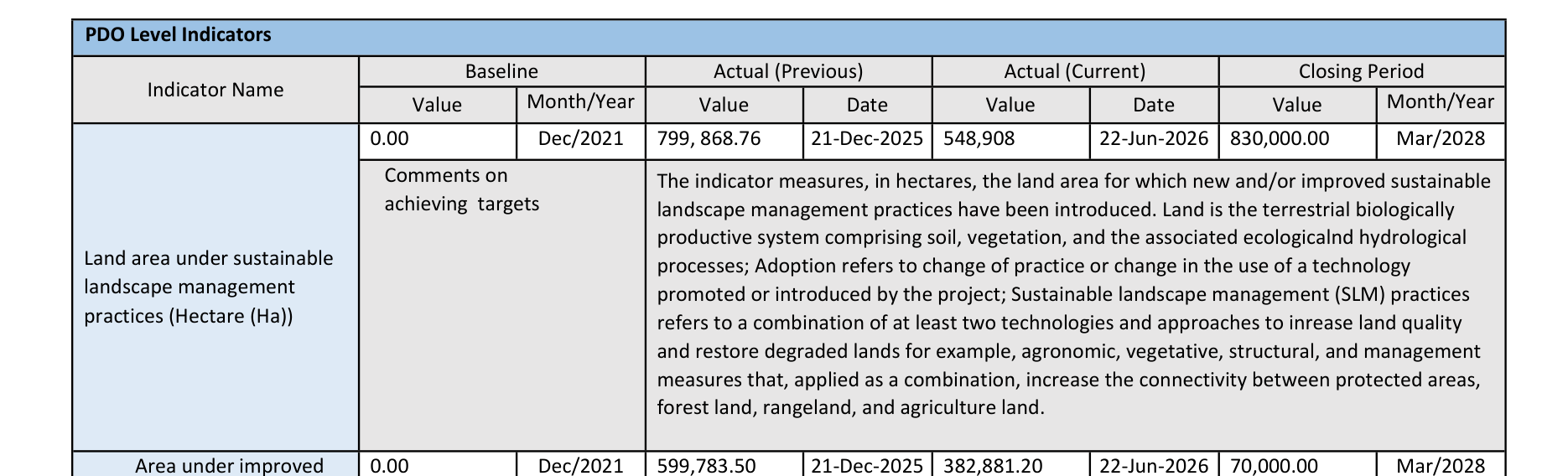
Table 1 of the PID shows where the money would go, and it also shows that the original US$700 million has already been moved between components. Component A, Dryland Management, was approved at US$327.8 million. It now appears at a 'revised original' figure of US$416.0 million and would get US$310.0 million of the new credit, for a total of US$726.0 million. Component B, Community Climate Resilience, was approved at US$293.4 million, has been revised down to US$185.5 million, and would get US$165.0 million, for a total of US$350.5 million. Component C, Institutional Strengthening and Project Management, goes from US$78.8 million to US$98.5 million and would get US$25.0 million, for a total of US$123.5 million. The contingent emergency component stays at zero. We added the columns ourselves: the revised figures come to US$700.0 million (416.0 + 185.5 + 98.5), the new money to US$500.0 million (310.0 + 165.0 + 25.0), and the totals to US$1,200.0 million. All three sums match the document.
Our own subtraction from that table (grade C, our arithmetic) shows that US$107.9 million was taken out of the community component (293.4 minus 185.5) and moved into dryland works and project management. That is before any new money arrives. The community component is the part that pays for community institutions, small-scale irrigation, agroforestry and a Community Revolving Fund. The PID does not explain the reallocation or say when it was approved. It only uses the label 'Revised Original Financing'.
For the project's progress we went to the latest Implementation Status and Results Report the Bank has published, dated 30 June 2026. We downloaded and read it as well. On money, it shows credit IDA-70150 as effective, with an original amount of US$700.00 million and a revised amount of US$670.73 million. It shows US$591.50 million disbursed, US$79.22 million undisbursed, 0.00 cancelled, and 88.19% disbursed. The report does not explain the gap between 700.00 and 670.73. Nothing is shown as cancelled, and IDA credits are usually committed in Special Drawing Rights, so exchange-rate movement is a possible reason. That is our inference, not something the document says. The report lists the credit as approved on 14 December 2021, signed on 24 February 2022, effective on 9 June 2022, and closing on 31 March 2028.
The headline results number is where the June report and the new request sit uneasily together. The first project development objective indicator, 'Land area under sustainable landscape management practices', had been reported at 799,868.76 hectares on 21 December 2025 (printed in the report as '799, 868.76'). The June report gives the current value as 548,908 hectares, dated 22 June 2026. The target for March 2028 is 830,000 hectares. By our arithmetic (grade C) the reported figure fell by 250,960.76 hectares, or about 31 percent, in six months. The new figure is about 66 percent of the closing target. The December figure had been about 96 percent of it.
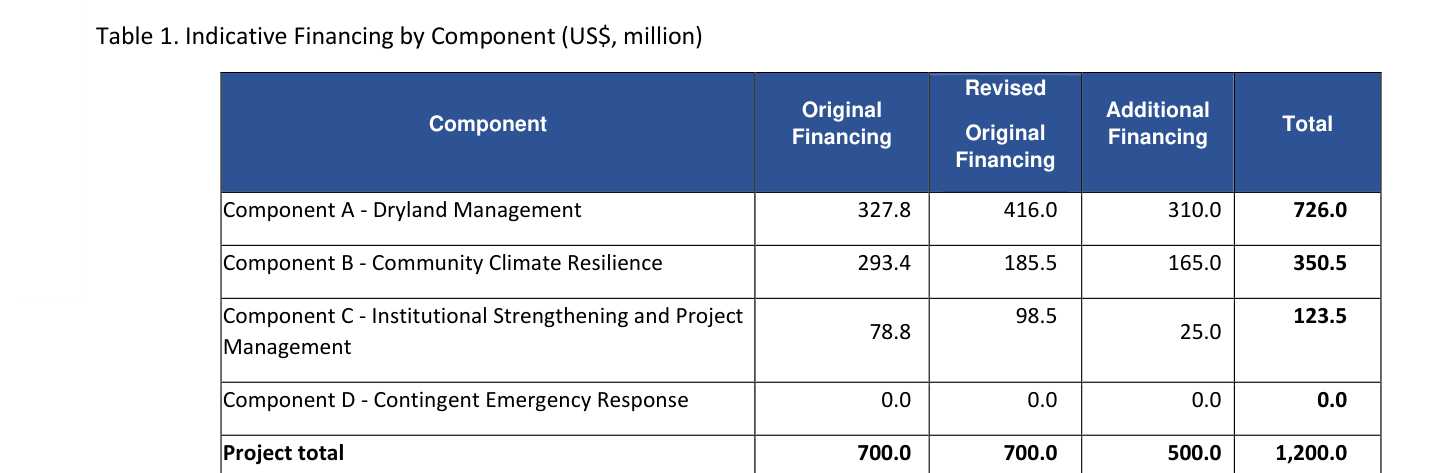
The report explains the change in the note on the sub-indicator for catchment management. That figure fell from 599,783.50 hectares in December 2025 to 382,881.20 hectares in June 2026. The note says it 'is reported at 382,881.15 ha based on the MTR methodology requiring two complementary SLM practices to be confirmed rather than one.' So the mid-term review, which the report says was carried out in April 2026, changed the rule: a hectare now counts only when two sustainable land management practices are confirmed on it, not one. The lower number therefore reflects a stricter count, not land that was lost. The report does not recalculate the earlier December figures under the new rule, so the two dates cannot be compared on the same basis. The same row gives a closing target of 70,000.00 hectares for this sub-indicator, less than a fifth of the value already reported. The document does not explain this. It may be a typing error, but we could not confirm that.
A second sub-indicator, 'Area under community-led landscape restoration', moved much less: from 122,785.51 hectares in December 2025 to 121,379.90 hectares in June 2026, against a target of 350,000 hectares. By our arithmetic (grade C) that is about 35 percent of the target. At that point the credit was 88.19 percent disbursed and the project had 21 months left before its March 2028 closing date.
Despite the lower numbers, the report's written summary is positive. It rates progress toward the development objective as Satisfactory, raises overall implementation progress from Moderately Satisfactory to Satisfactory, and keeps overall risk at High. Its section on key issues says the mid-term review 'confirmed that the project is making strong progress toward achieving its Project Development Objective' and that 'financial performance remains strong, with project disbursement reaching about 88% of total financing'. That section does not mention that the main land figure was revised down in the same report.
The PID for the new money says little about the revision directly. It says the Government 'has requested AF of US$500 million to scale up demonstrated project results'. It also commits the additional financing to 'independent verification' that will 'provide additional assurance regarding the scale, quality and sustainability of reported results', with priority for 'technically complex or strategically important results'. It says the project remains in the High environmental and social risk category because of the scale of its infrastructure, work across many states, security problems, and risks around land acquisition and labour. The PID does not give a revised hectare target for the enlarged US$1.2 billion project. On what we read, that target would be set in the project appraisal document, which had not been published by the time of our check.

Put simply, the record shows a project that has spent most of its first credit and reports a large amount of work: 20 completed catchment management plans, restoration and civil works, and community programmes. Its main land figure is now smaller than the one it reported six months earlier, because the counting rule got stricter. Nigeria is being asked to add US$500 million of debt to it, taking the total to US$1.2 billion. Nothing in the documents suggests wrongdoing. The mid-term review changed how land is counted, and the Bank published both numbers. The question for the board on 29 October, and for the National Assembly, which has to approve external borrowing, is how the expanded project will be measured and which hectare figure its results will be judged against.
On the other two credits we got less far. The World Bank's public projects database, which we queried on 30 September 2026, did not return a listed operation under the names reported for the Early Childhood Development programme or HOPE-SP, and we found no disclosed documents for either. What is said about them here (US$500 million each, Program-for-Results structure, board dates in March 2027) comes from press reports and is grade B. We also did not find a Debt Management Office borrowing plan or Medium-Term Expenditure Framework table that names any of the three credits, so we cannot say whether they were in the government's announced 2026 borrowing. Sums on this scale usually go to the National Assembly as part of an external borrowing plan. We found no public record that this has happened for these three.
Vero Record is not reporting any wrongdoing. The documents describe a change in counting method during a scheduled mid-term review and a reallocation between components. The World Bank recorded both, the first explicitly and the second through a table label. We would welcome the Federal Ministry of Environment's and the ACReSAL Federal Project Management Unit's explanation of the US$107.9 million shift out of the community component and of the 70,000-hectare target, and the World Bank's statement of the hectare targets it will use for the enlarged project.
What this rests on
All financing, component, disbursement, date and indicator figures are copied from the two World Bank PDFs we read (grade A). Differences and percentages (the 250,960.76 ha fall, the 31%, 66% and 35% ratios, the US$107.9m reallocation, column totals) are our own arithmetic (grade C). Facts about the other two credits and the 28 Sep reporting come from the press (grade B).
What this does not establish
Why the original US$700m was reallocated between components, and when that was approved; why the credit's revised amount is US$670.73m (exchange rates are possible but unconfirmed); whether the 70,000 ha target is a typing error; what the revised hectare targets for the US$1.2bn project will be; whether the three credits appear in the DMO borrowing plan or MTEF, or have gone to the National Assembly; any World Bank documents for the ECD and HOPE-SP operations.
What we did ourselves
We used the World Bank documents API to list the project's disclosures, downloaded and read the 25 Sep 2026 PID and the 30 Jun 2026 ISR, re-added the component tables, compared indicator values across the two reporting dates, queried the Bank's projects database for the other two operations, and rendered crops of the key tables.
Sources for this report
(A) World Bank Project Information Document PIDIAF0342, ACReSAL (P175237) Additional Financing Request 1, appraisal stage, dated 25 Sep 2026; World Bank Implementation Status and Results Report for ACReSAL (P175237), 30 Jun 2026. We downloaded and read both.
- Project Information Document (PID), Appraisal Stage: ACReSAL (P175237) Additional Financing Request 1, Report No PIDIAF0342 · World Bank · 2026-09-25
- Disclosable Version of the ISR: ACReSAL (P175237), Jun 30, 2026 · World Bank · 2026-06-30
- ACReSAL project page (P175237) · World Bank
- World Bank Documents & Reports API listing for P175237 · World Bank · 2026-09-30
- World Bank projects API query, Nigeria · World Bank · 2026-09-30
- FG engages World Bank for fresh $1.5 billion loans · Nairametrics · 2026-09-28
- FG seeks $1.5bn World Bank loan to fund social protection, child development, climate resilience projects · TheCable · 2026-09-28
- FG seeks $1.5bn World Bank loans as debt hits N166.79tn · The Guardian Nigeria · 2026-09-28
- Nigeria: Inside Govt's Fresh $1.5bn World Bank Loan · allAfrica · 2026-09-29
- File:River Hadejia 02.jpg · Wikimedia Commons

Confidence: high. This is our own assessment of whether the event occurred as described, separate from the grade, which describes what kind of thing the claim rests on.
Not obtained: where the underlying document is named above but not linked, we did not hold a copy at the time of publication. We purchase nothing and request nothing in our own name.
Corrections
None on this report. If you find an error, it will be published here, at the same length, with the date it was found, and the original wording will remain visible above it.