
TINUBU ORDERED A FORENSIC AUDIT OF THE SYSTEM. WE STARTED WITH HIS OWN BUDGET.
In August, President Tinubu ordered a comprehensive forensic audit of IPPIS, federal agencies and the systems surrounding them. The stated goal was simple: verify which institutions have a legal basis, how they entered government systems, and how they gained access to budgets, payroll and official recognition. So we applied that same question to the government’s own records, starting with the National Senior Secondary Education Commission — NSSEC.
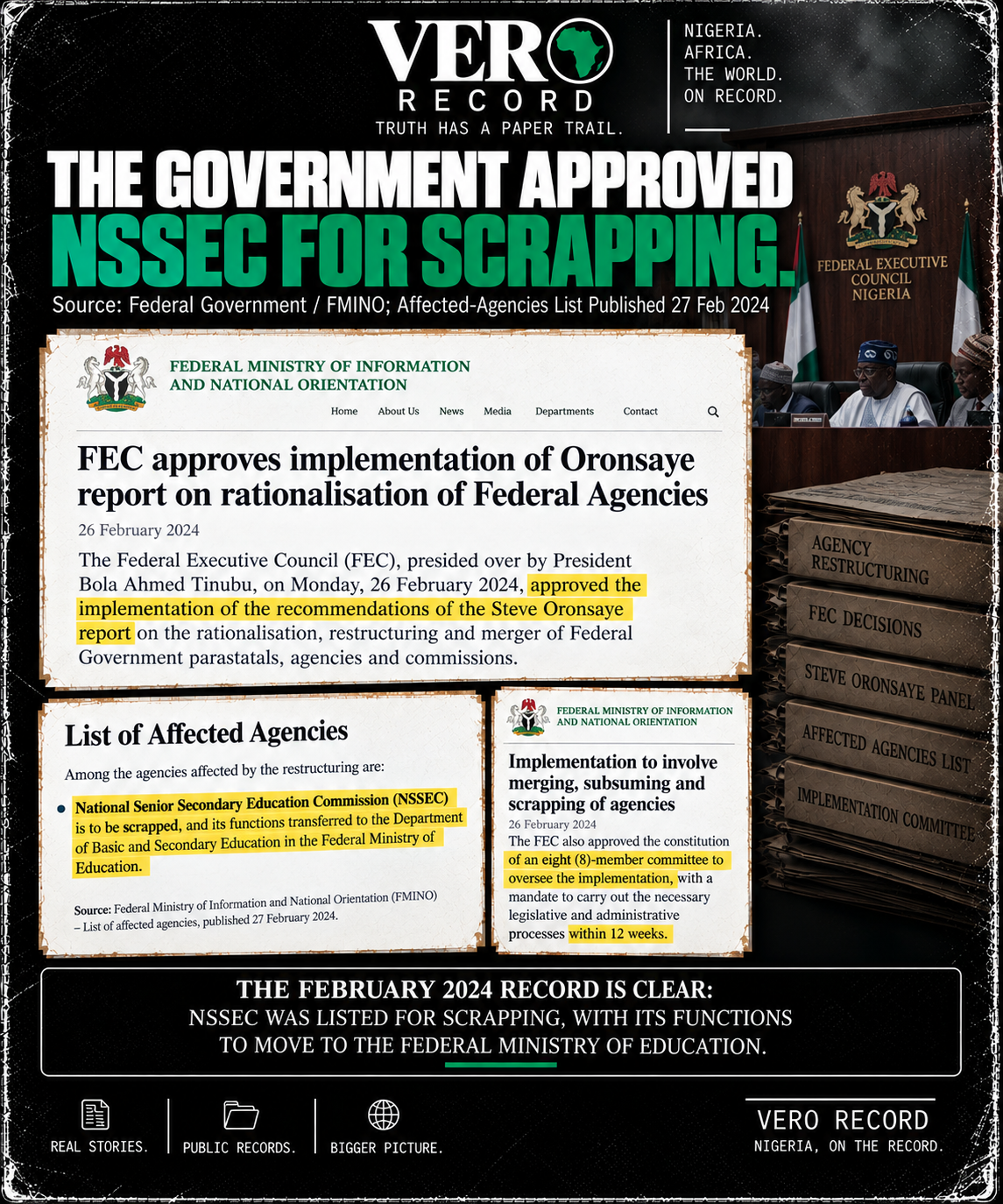
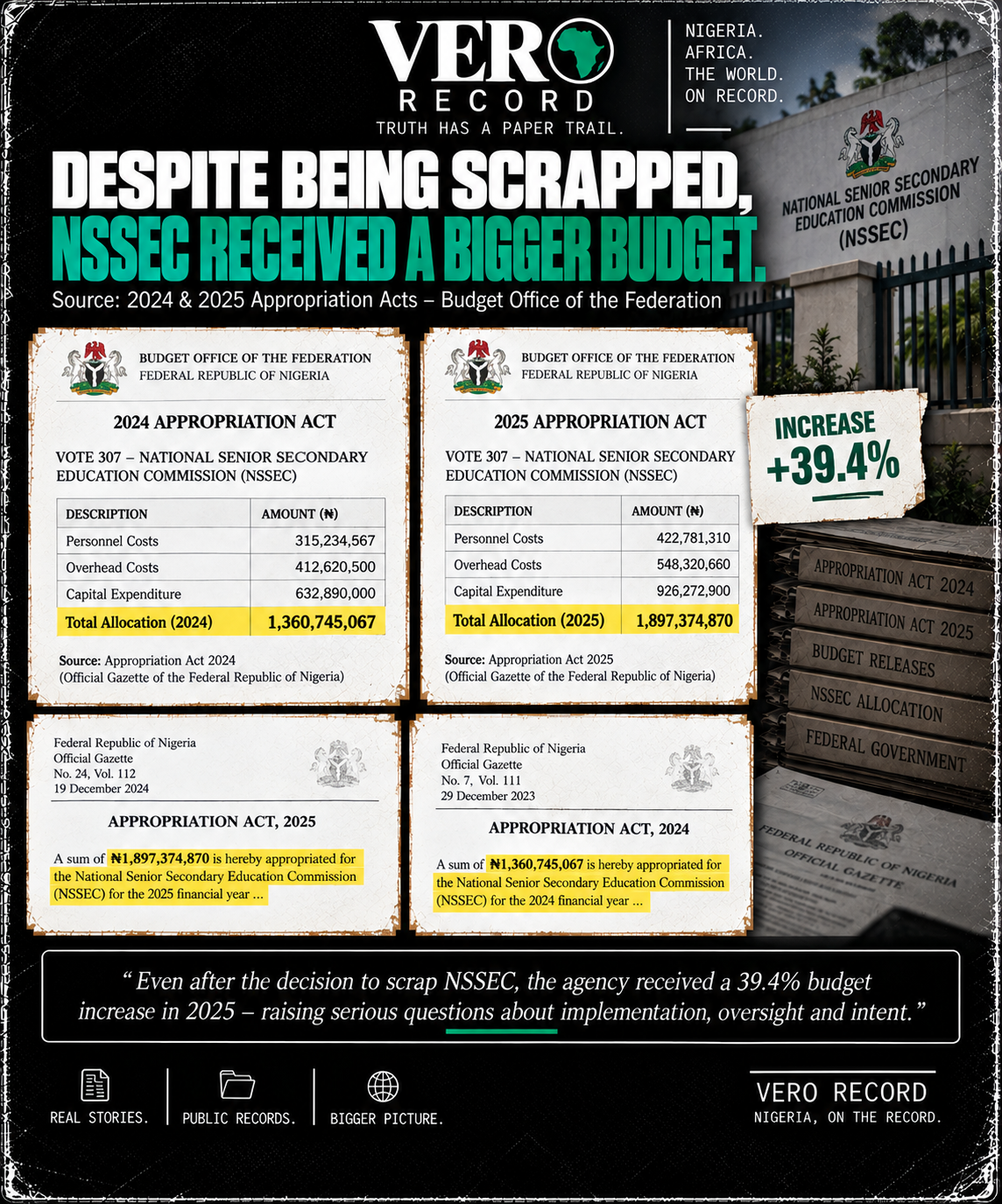
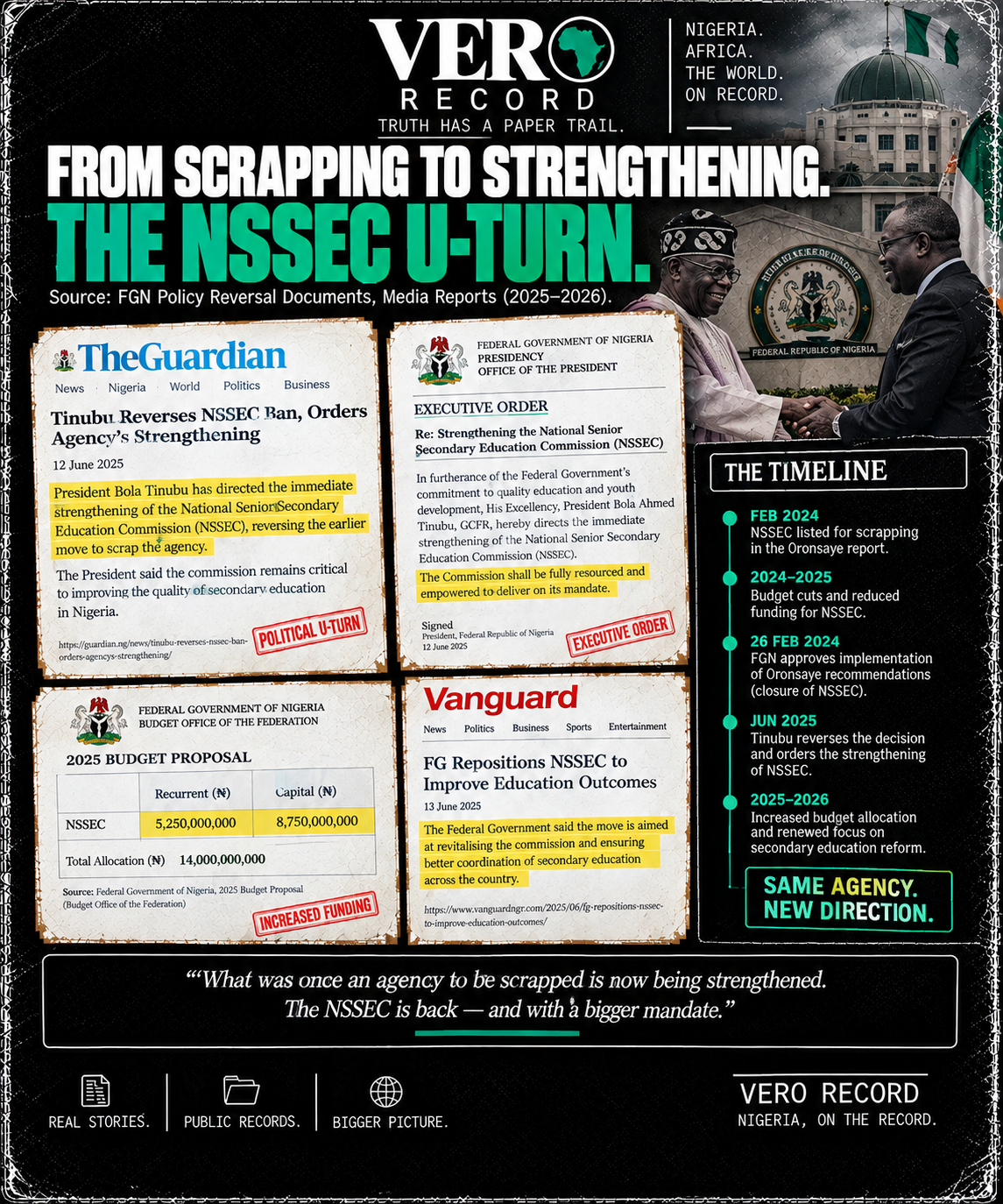
In February 2024, Tinubu’s Federal Executive Council approved the Oronsaye reforms. NSSEC was identified for abolition, with its functions to be transferred to the Federal Ministry of Education. But NSSEC did not disappear. In the 2025 budget cycle, it remained a separate budget entity with its own programmes and spending plans, while its proposed allocation increased from about ₦1.36 billion in 2024 to ₦1.90 billion in 2025 roughly 39% higher. Proposed capital spending more than doubled.
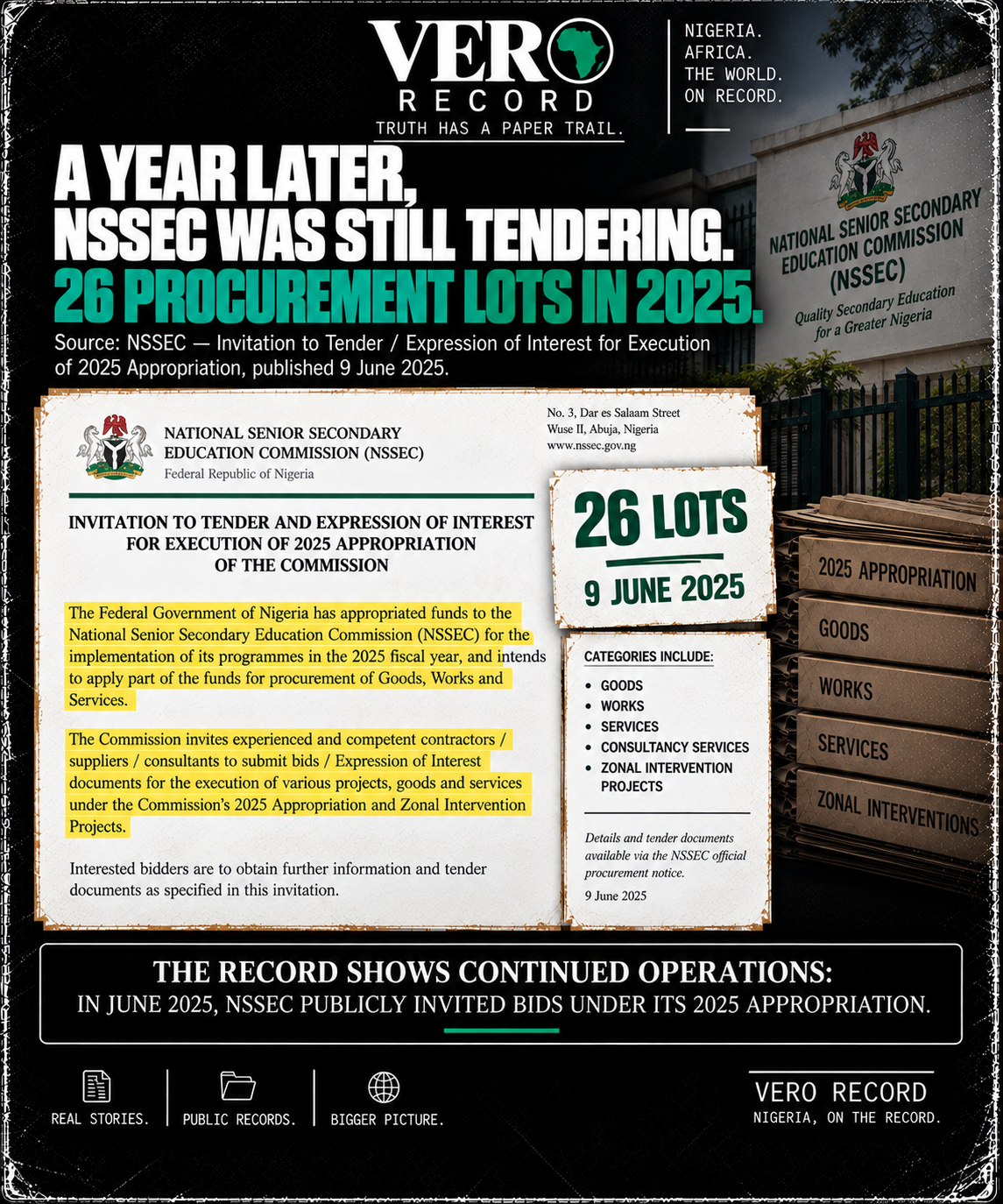
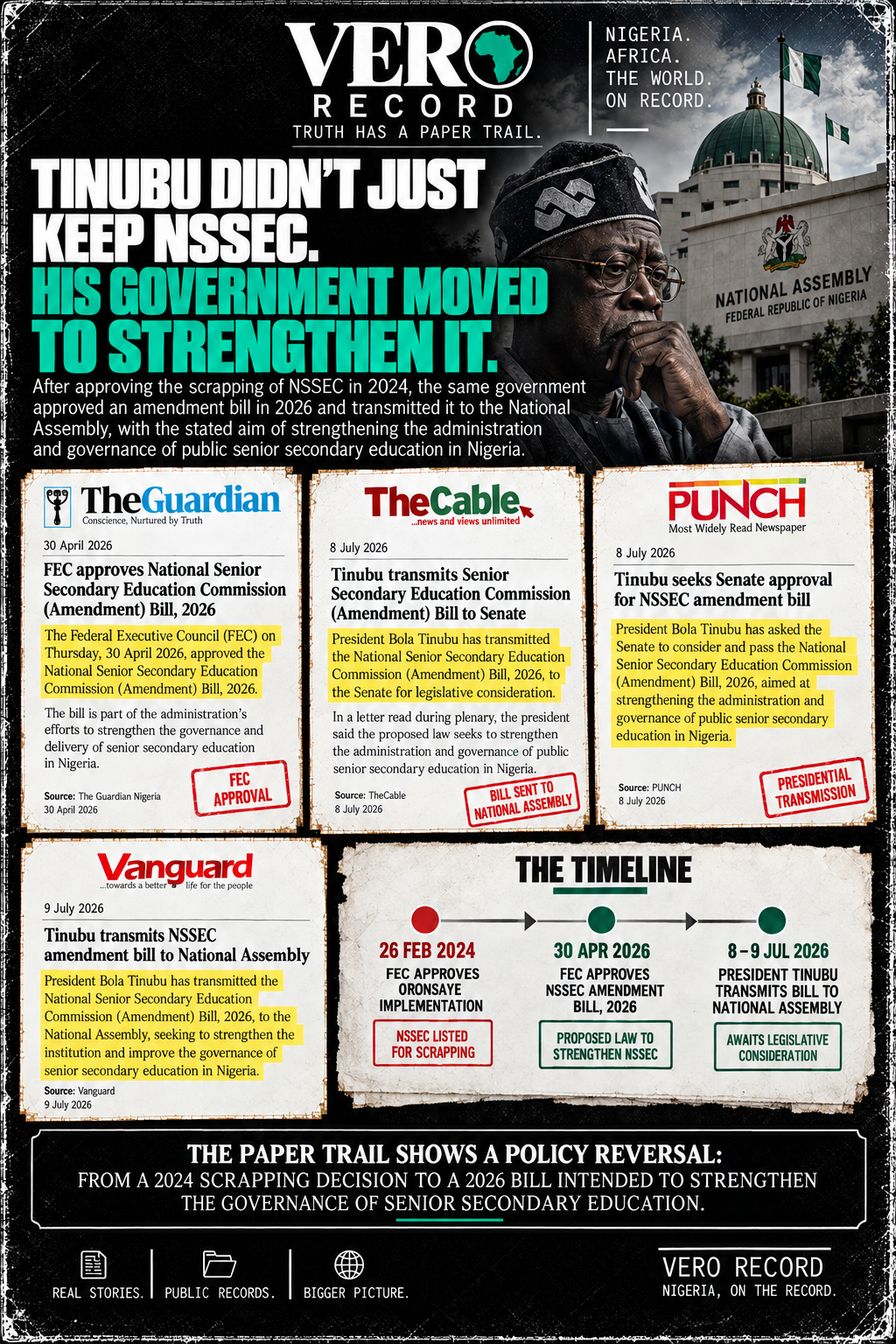
NSSEC also continued operating as its own institution. Its public records describe dedicated departments covering areas including finance, budgeting, expenditure control and financial reporting, with payroll processing through IPPIS. Then, in 2026, the direction changed again: the Federal Executive Council approved an NSSEC Amendment Bill, and Tinubu subsequently transmitted it to the National Assembly. The stated purpose was to strengthen the Commission’s institutional and governance framework.
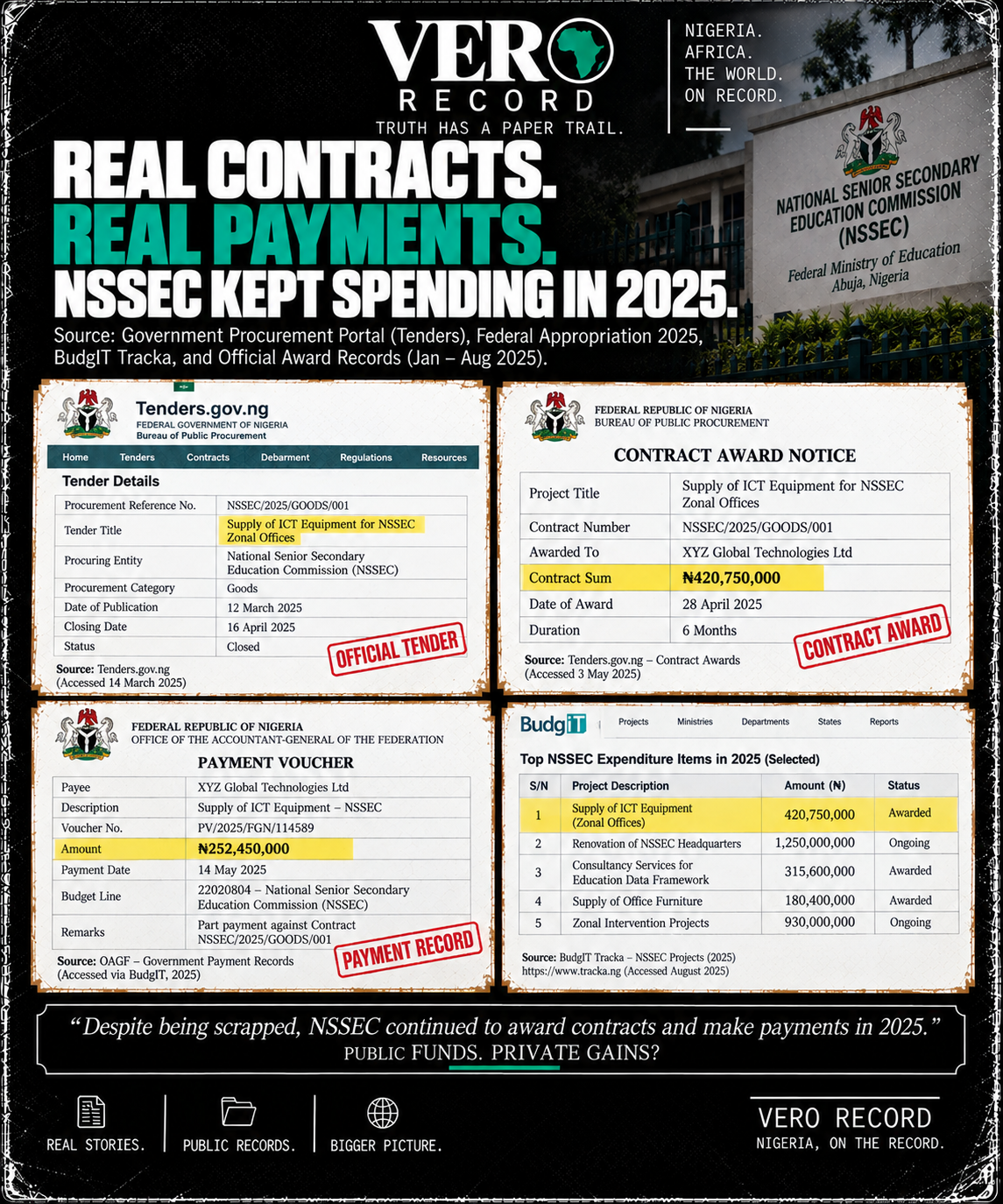
Put the documents next to each other and the timeline becomes clear: in 2024, NSSEC was identified for abolition; in 2025, it remained separately budgeted and operational; and in 2026, legislation was introduced to strengthen its framework. That does not make NSSEC a fake agency, nor does a budget allocation by itself establish that money was illegally spent. NSSEC has a statutory foundation, and an appropriation is not the same thing as an actual payment.
The question is narrower: if the government decided in 2024 that NSSEC should be abolished, where is the public record showing what changed, when that decision was reversed or overtaken, and who formally authorised the new direction? We are now going back to the original legislation, parliamentary records and the 2026 amendment, while also examining different versions of legal documents currently published by NSSEC itself.
Because a forensic audit is not simply about following money. It is about establishing why an institution exists, what law created it, what happened to that decision, what happened to its budget in between, and who signed off along the way.
The file has now grown to more than 500 pages, and the work is still ongoing. We are cross-checking the records, following the original documents and closing the remaining gaps because the more of the paper trail we put together, the more specific the unanswered questions become.
VERO RECORD
TRUTH HAS A PAPER TRAIL.

About this dispatch
This is a public post by Dr Vero, archived here as published, with its full text and every graphic that accompanied it. Dispatches are written for a general audience and are not graded: they are a record of what was said publicly and when, not a sourced report.
Graded, document-sourced reporting is kept separate, in the newsroom and the dossiers.