
Sowore Says The Money Is There. The Numbers Tell A More Complicated Story.
Sowore wasn’t getting a free pass either. We’ve looked at Tinubu, Atiku, Obi and others, and the standard stays the same. He has been especially vocal lately, so we went back through his own promises, interviews and numbers to see what the public record actually shows.
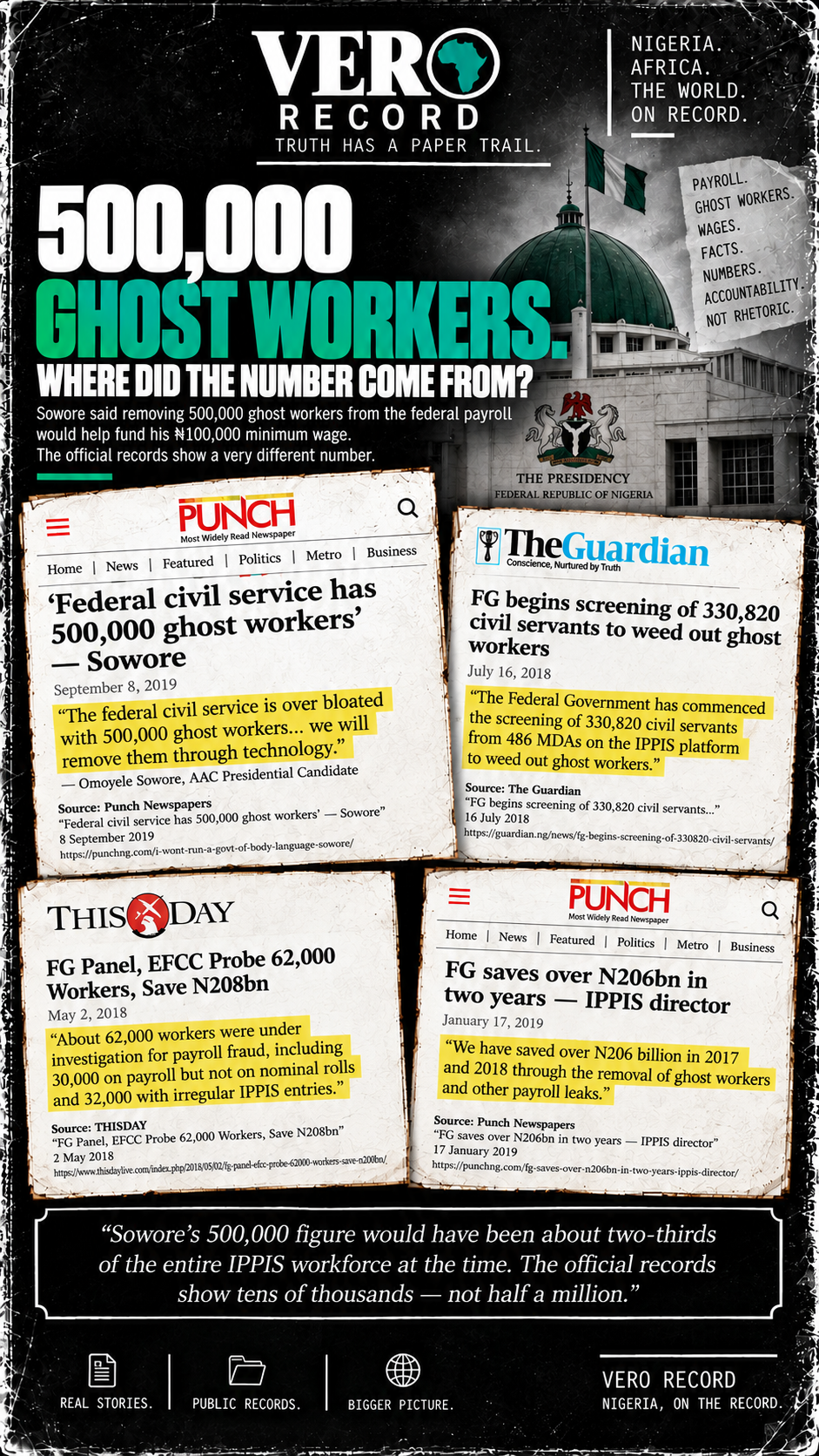
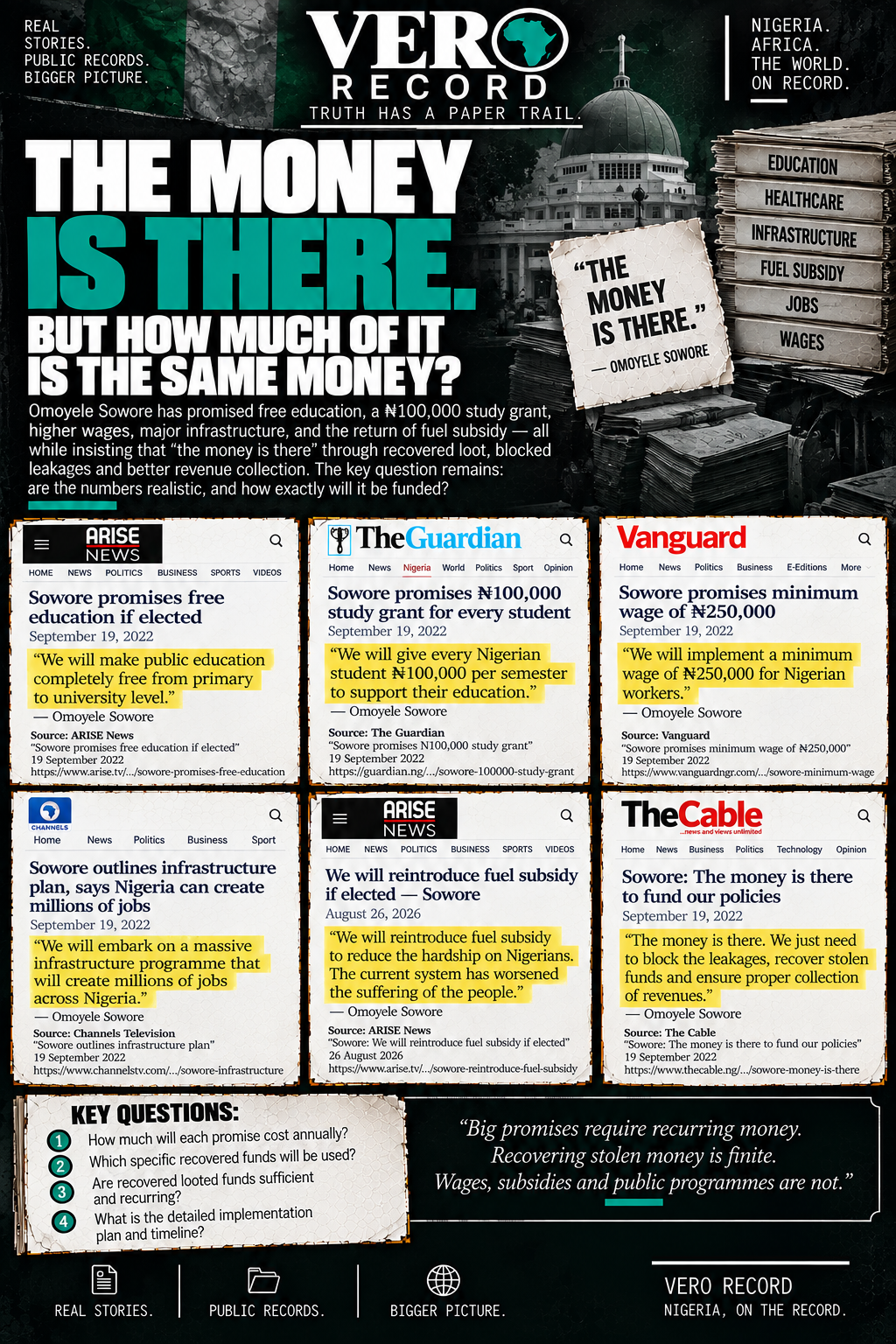
Omoyele Sowore has spent years making very big promises sound simple. Free education, higher wages, major infrastructure, fuel subsidy and recovered stolen funds. His argument has often been the same: “The money is there.” The question is where it is going.
In 2018, he was talking about a ₦100,000 minimum wage, five million jobs, 200,000 teachers and 160,000 healthcare workers. By 2022, he had also promised free education at every level, ₦100,000 per semester for students and an infrastructure programme his own manifesto estimated at about $485 billion over four years, while arguing Nigeria would not need to borrow in his first four years.
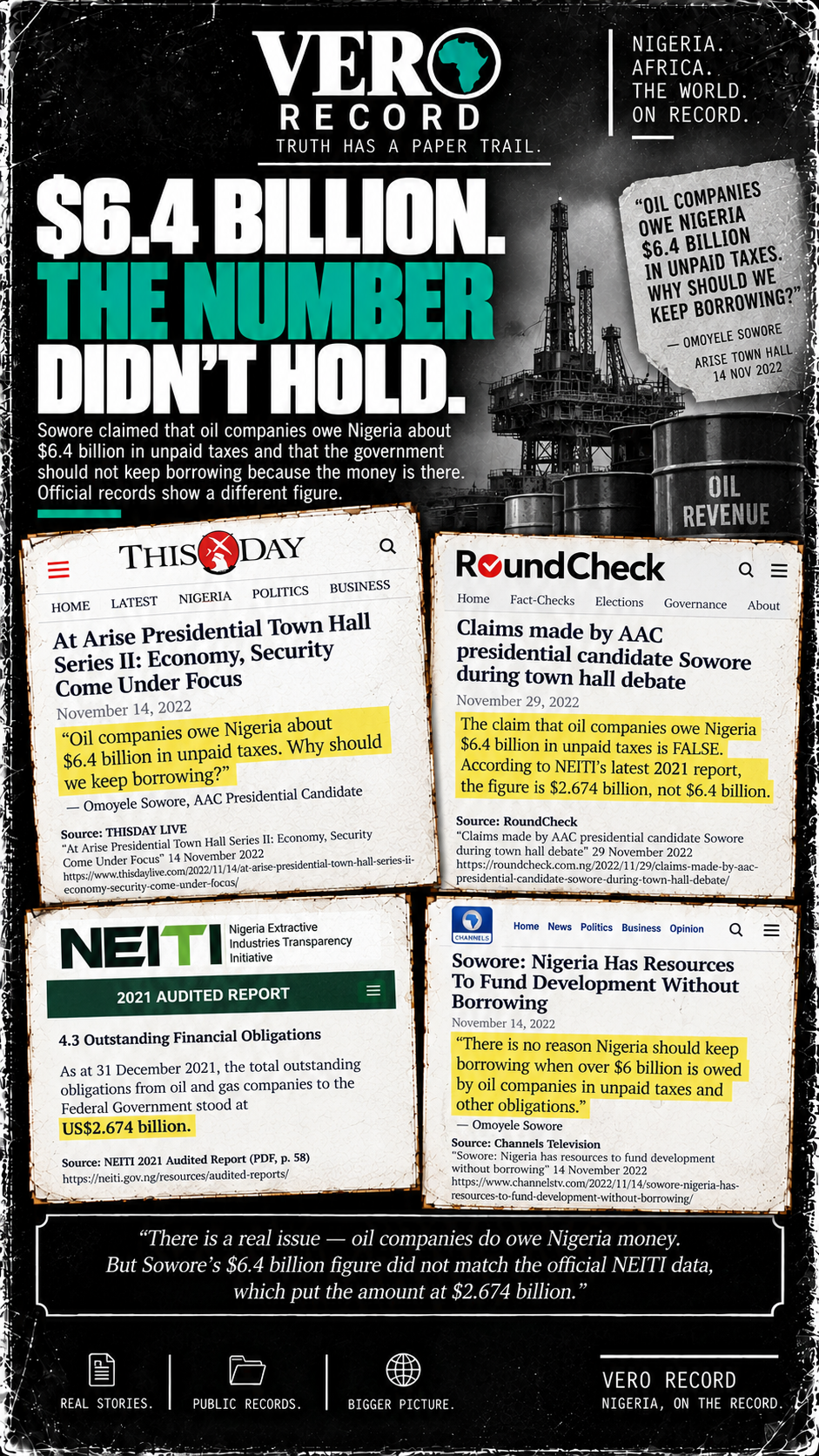
That is where the numbers matter. Sowore said oil companies owed Nigeria about $6.4 billion, but RoundCheck compared the claim with NEITI data and found the relevant figure was about $2.674 billion. He also called the proposed 2023 budget “illegal” over the deficit level, while Africa Check found that although the percentage was close, the legal conclusion was incorrect.
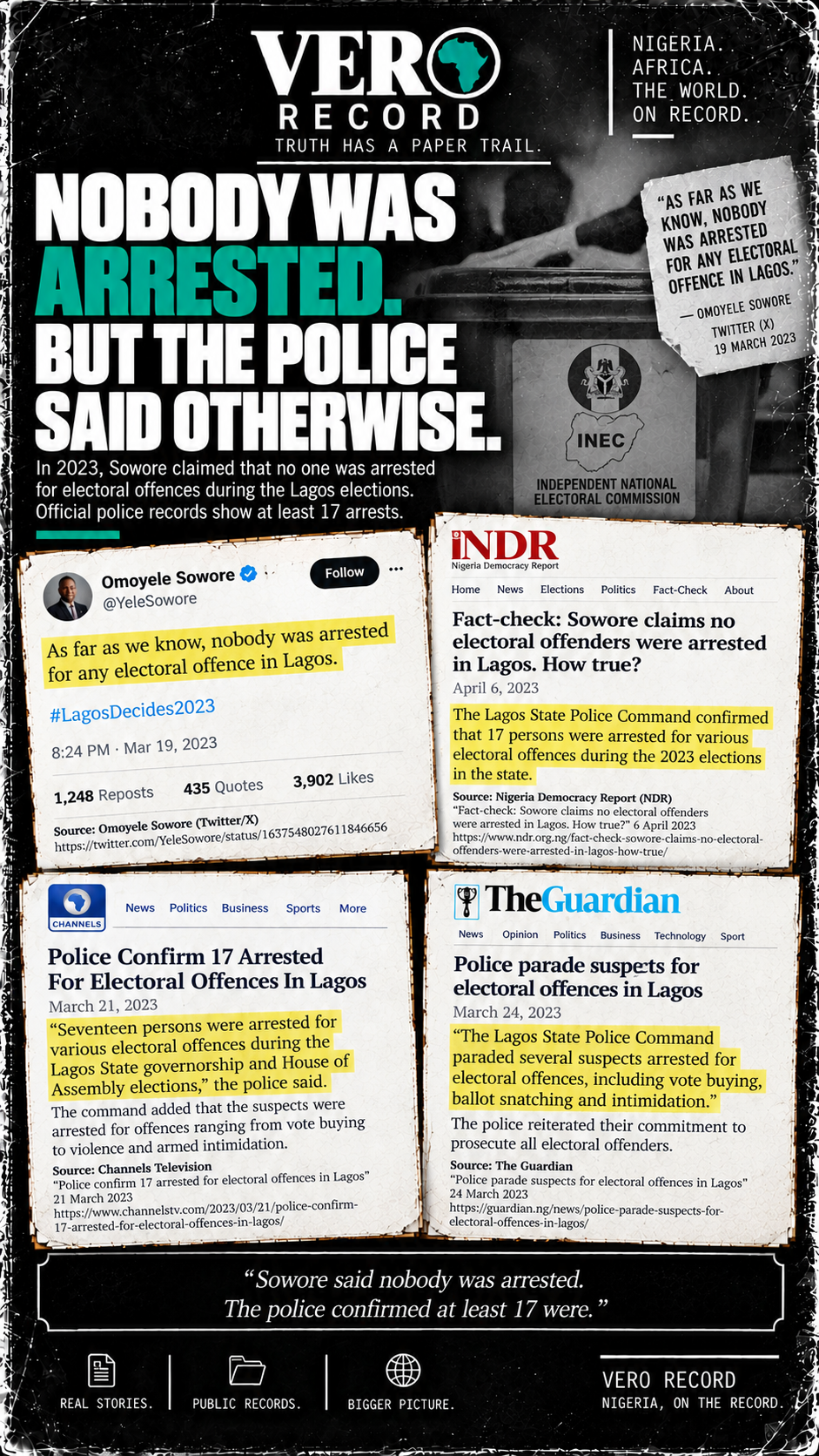
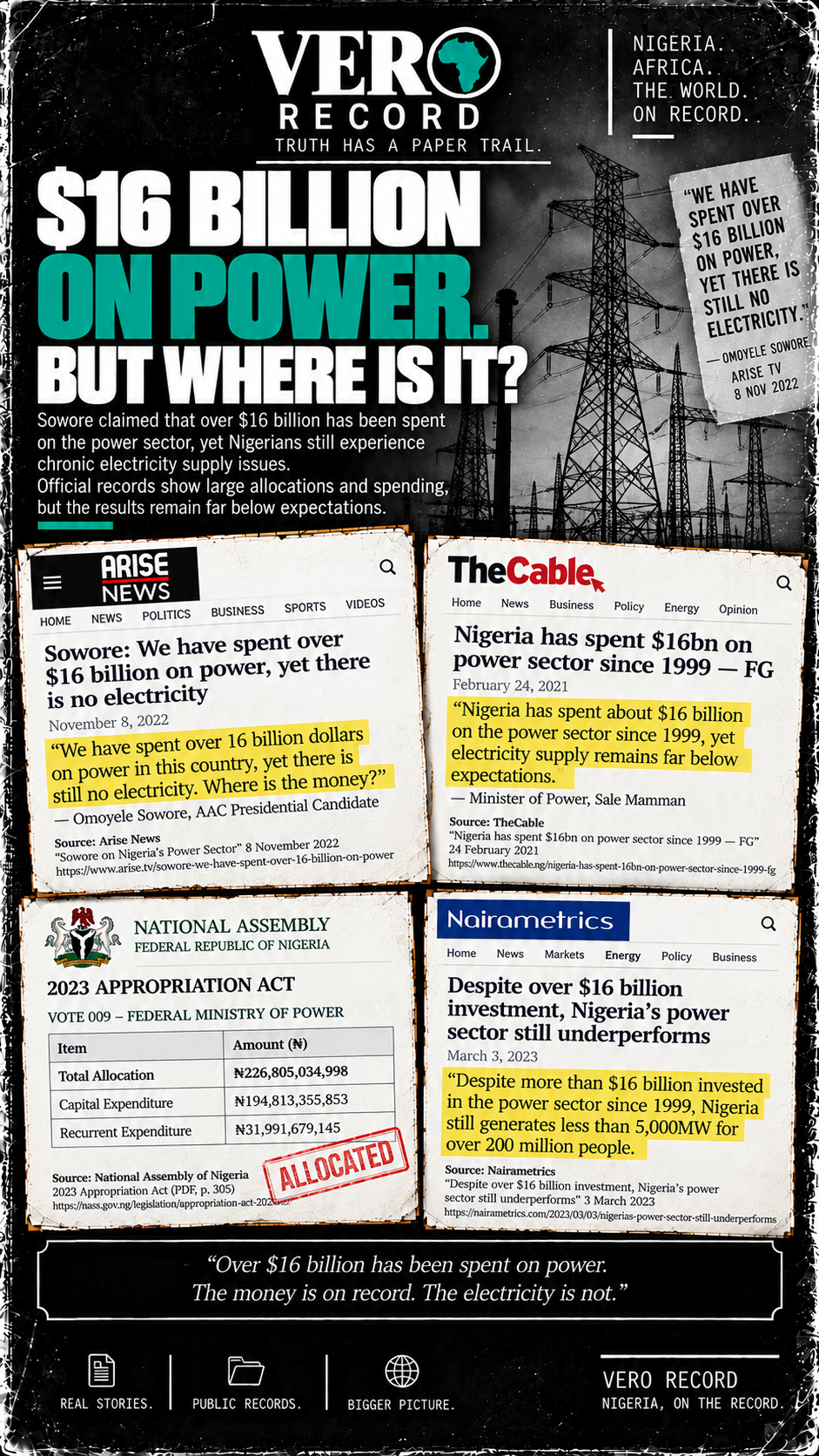
There was also the claim that $16 billion had been spent on Nigeria’s power sector. Billions had certainly been spent, but Africa Check concluded that the available public record did not support Sowore’s specific figure. After the 2023 elections, he also said nobody had been arrested in Lagos for electoral offences, while police later said 17 suspects had been arrested.
That does not mean every claim he makes is false. In several cases, the underlying problem was real. Oil companies owed Nigeria money, corruption and revenue leakages are serious issues and huge amounts have gone into power. The problem is that the specific figure or conclusion sometimes becomes harder to defend once the documents are checked.
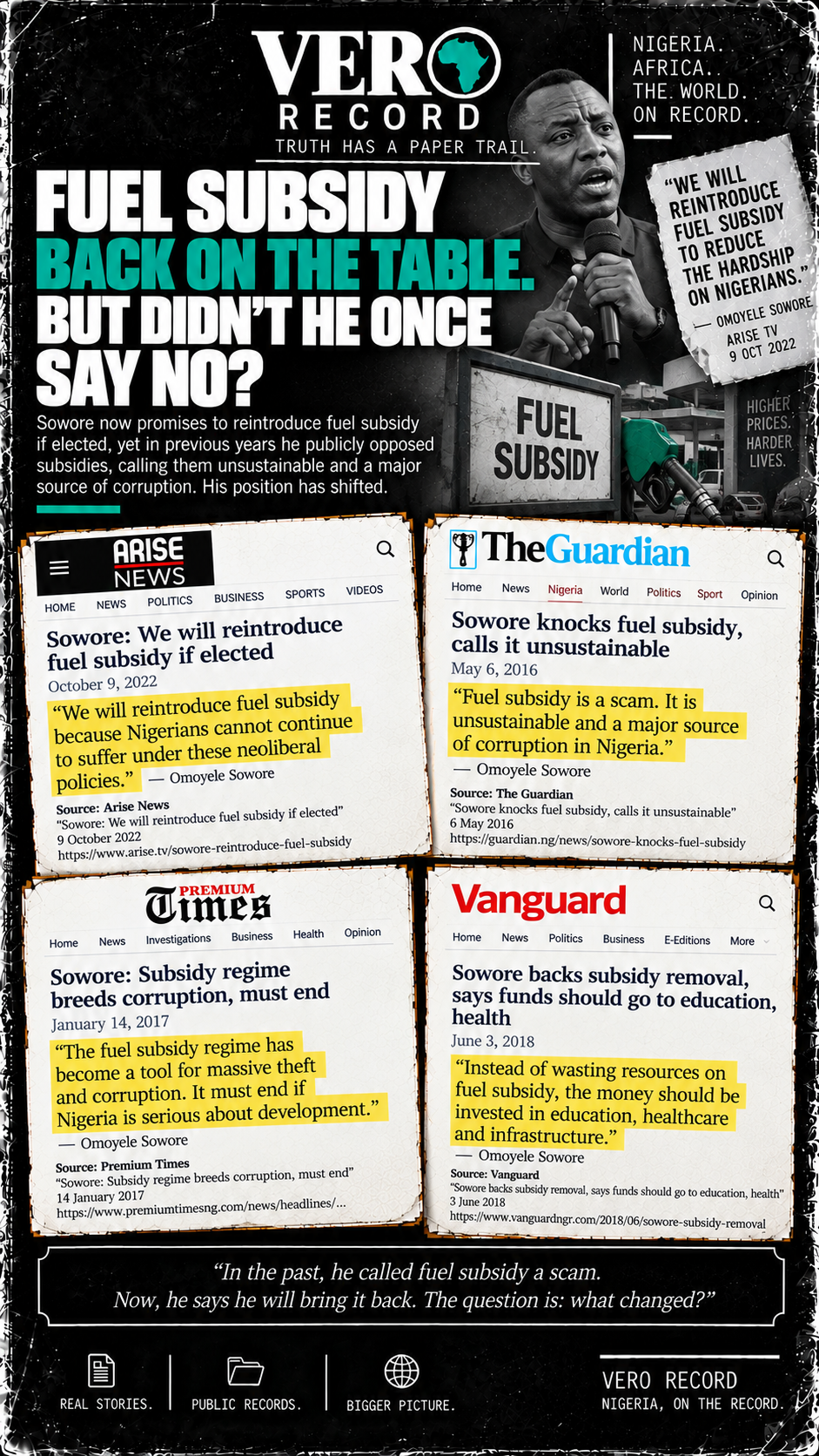
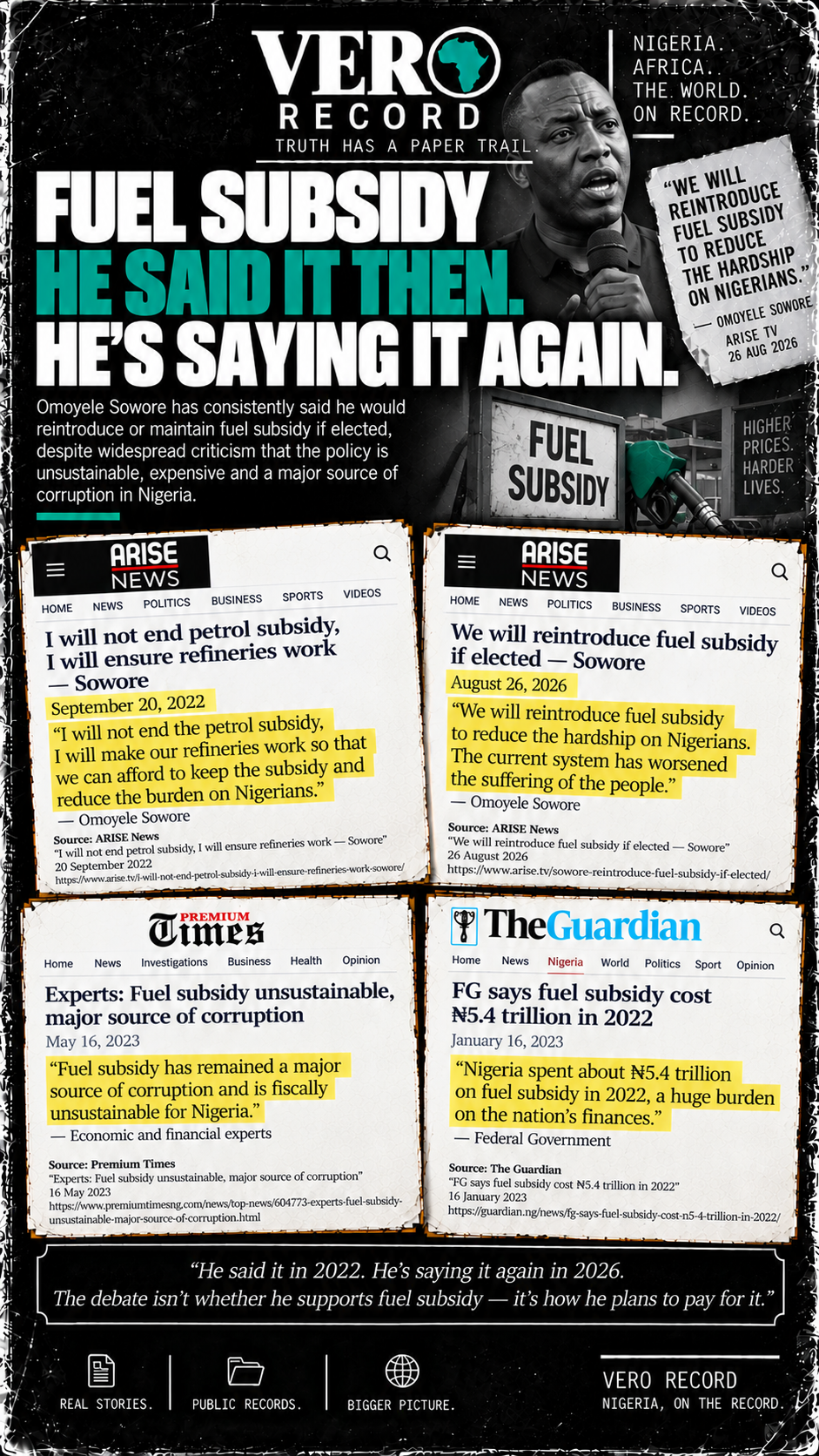
Now in 2026, Sowore again says fuel subsidy should return. He also says governors convert public funds into dollars and move the money to Dubai, and that virtually every senator has a Bureau de Change. Those are serious allegations, and they sound familiar.
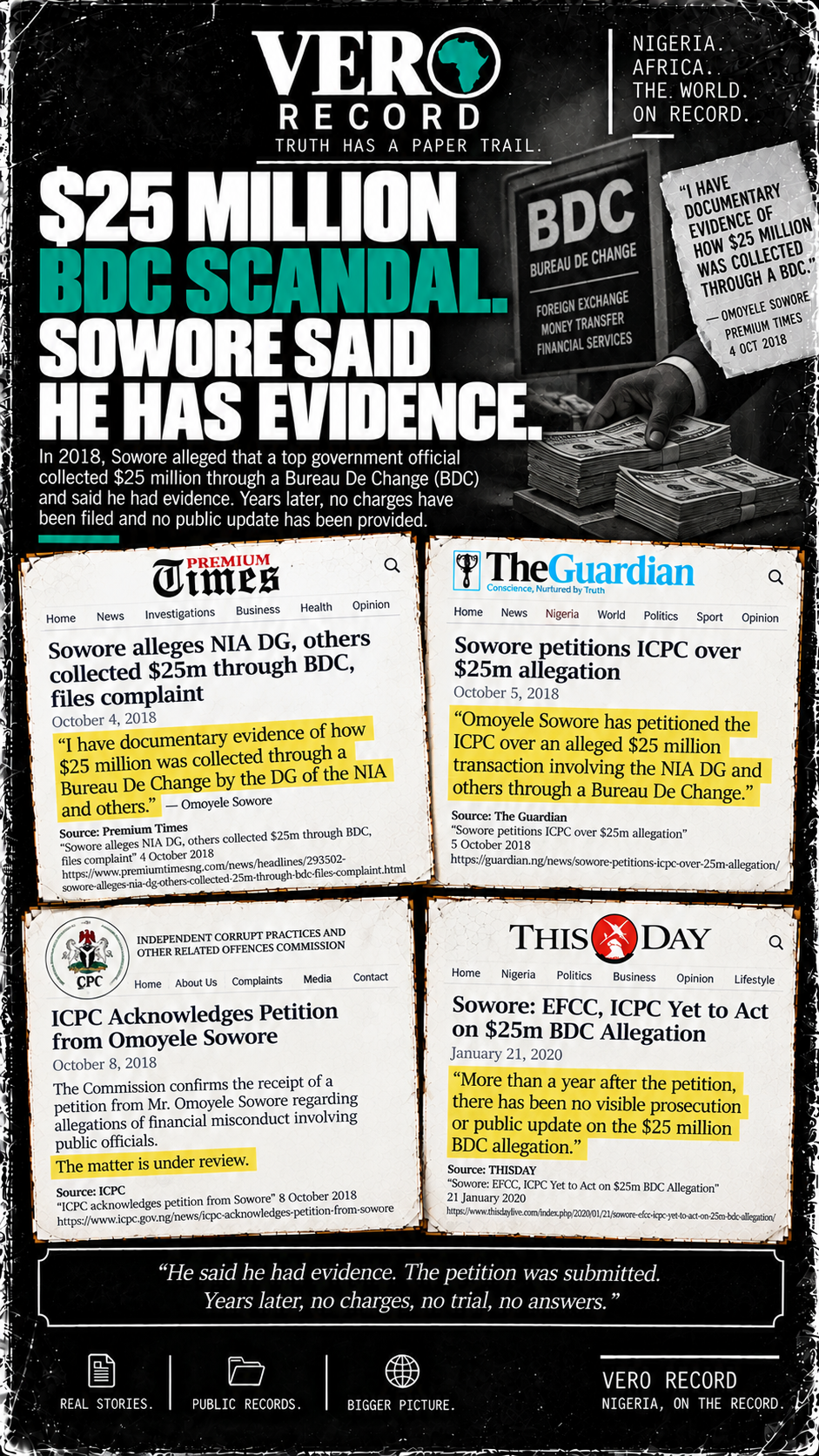
Back in 2018, Sowore made another allegation involving politicians, dollars and BDC operators. When challenged, he said the claims were proven and that he had evidence. Years later, we found the allegation and the statement, but what we have not located in the public record we reviewed is the documentary evidence that fully closes the loop.
That does not prove the allegation is false. It means the evidence still matters. If governors are converting public money into dollars and moving it to Dubai, Nigerians deserve to know which governors, which BDCs, which transactions and how much money.
And on the question of “where is the money going?” that is fair, but the public record also shows more federation revenue flowing to states and local governments after subsidy removal. That does not prove the money was well spent, but it does mean the money did not simply disappear. If Sowore says governors diverted it, then show where, show by whom and show the trail.
And if that money is supposed to help fund fuel subsidy, higher wages, free education and a $485 billion infrastructure programme, Nigerians deserve to see that calculation too. Our numbers will not always look like a politician’s numbers, because we work from the records we can verify, state our assumptions and then calculate from there.
That is how we research: claim, source, calculation, cross check. Not because the answer has to be against Sowore, but because the numbers have to survive the documents.
Maybe Sowore can prove every word and if he can, the story becomes even bigger.
Don’t believe him. Don’t disbelieve him. Check him.
VERO RECORD
Truth has a paper trail.

About this dispatch
This is a public post by Dr Vero, archived here as published, with its full text and every graphic that accompanied it. Dispatches are written for a general audience and are not graded: they are a record of what was said publicly and when, not a sourced report.
Graded, document-sourced reporting is kept separate, in the newsroom and the dossiers.