
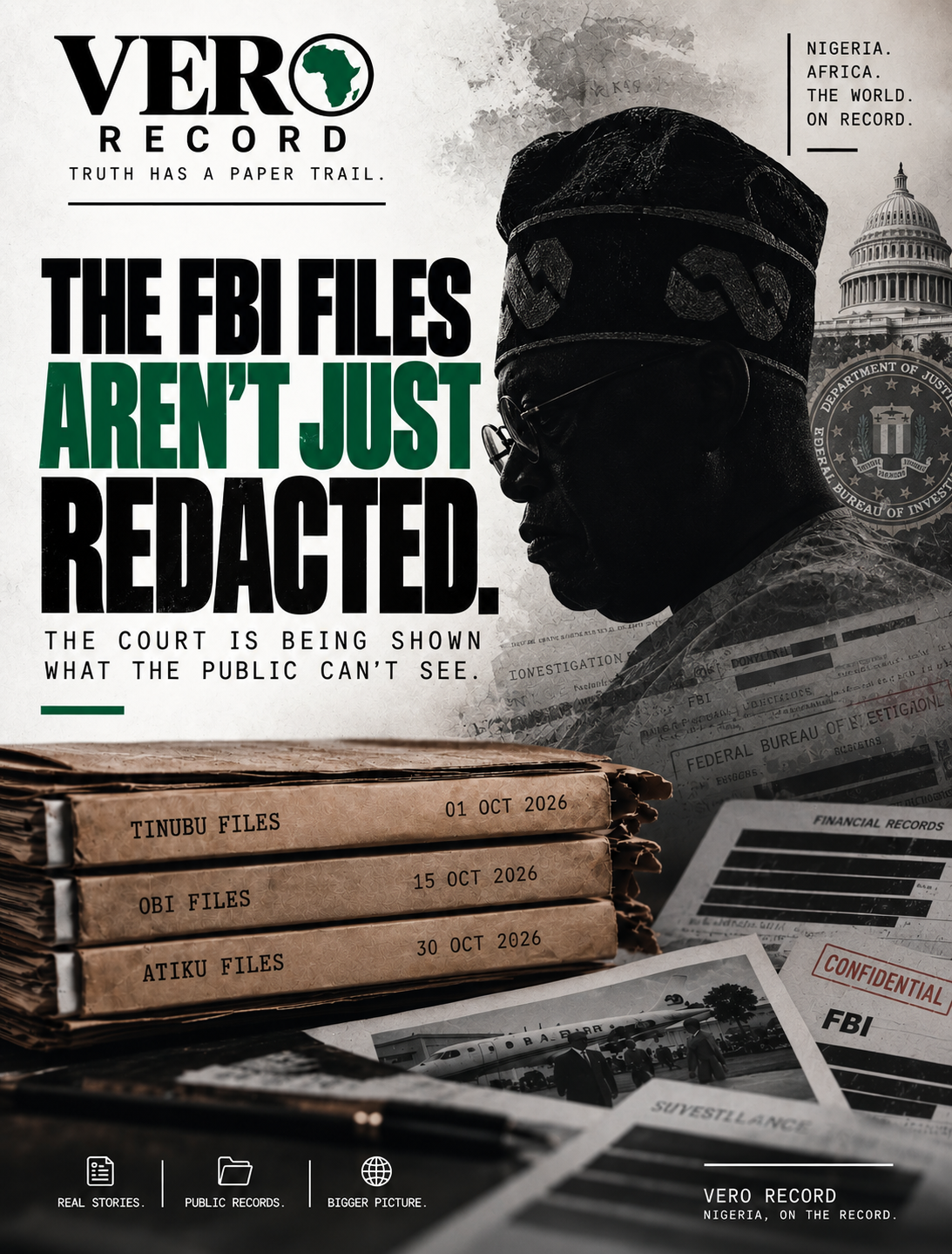
THE FBI FILES AREN’T JUST REDACTED. THE COURT IS BEING SHOWN WHAT THE PUBLIC CAN’T SEE.
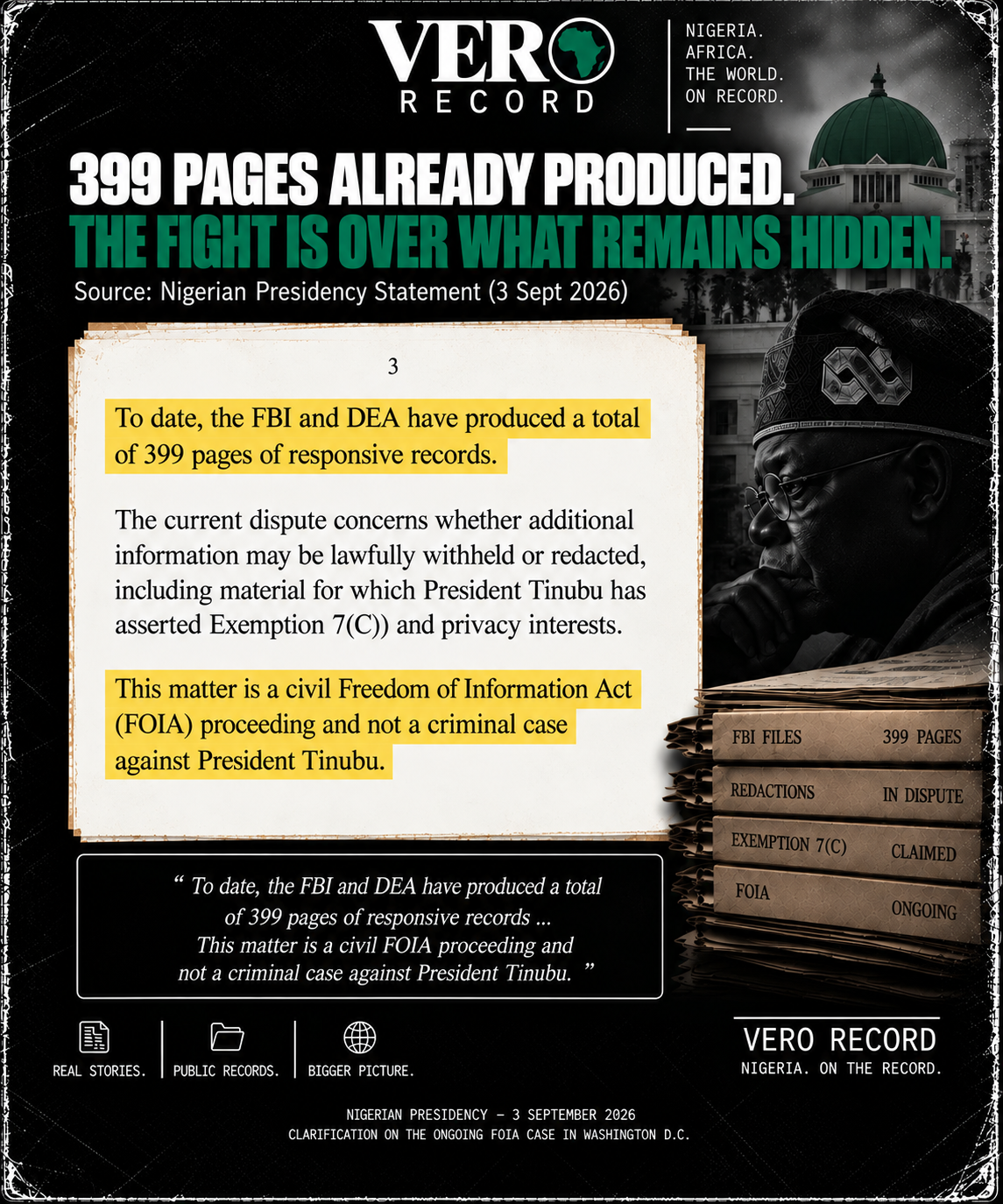
This week, Tinubu’s Presidency told Nigerians to separate the actual US court case from political speculation. That part is correct. The case before Judge Beryl Howell is a civil Freedom of Information Act dispute, not a criminal prosecution of President Bola Tinubu.
So we went through the court record.
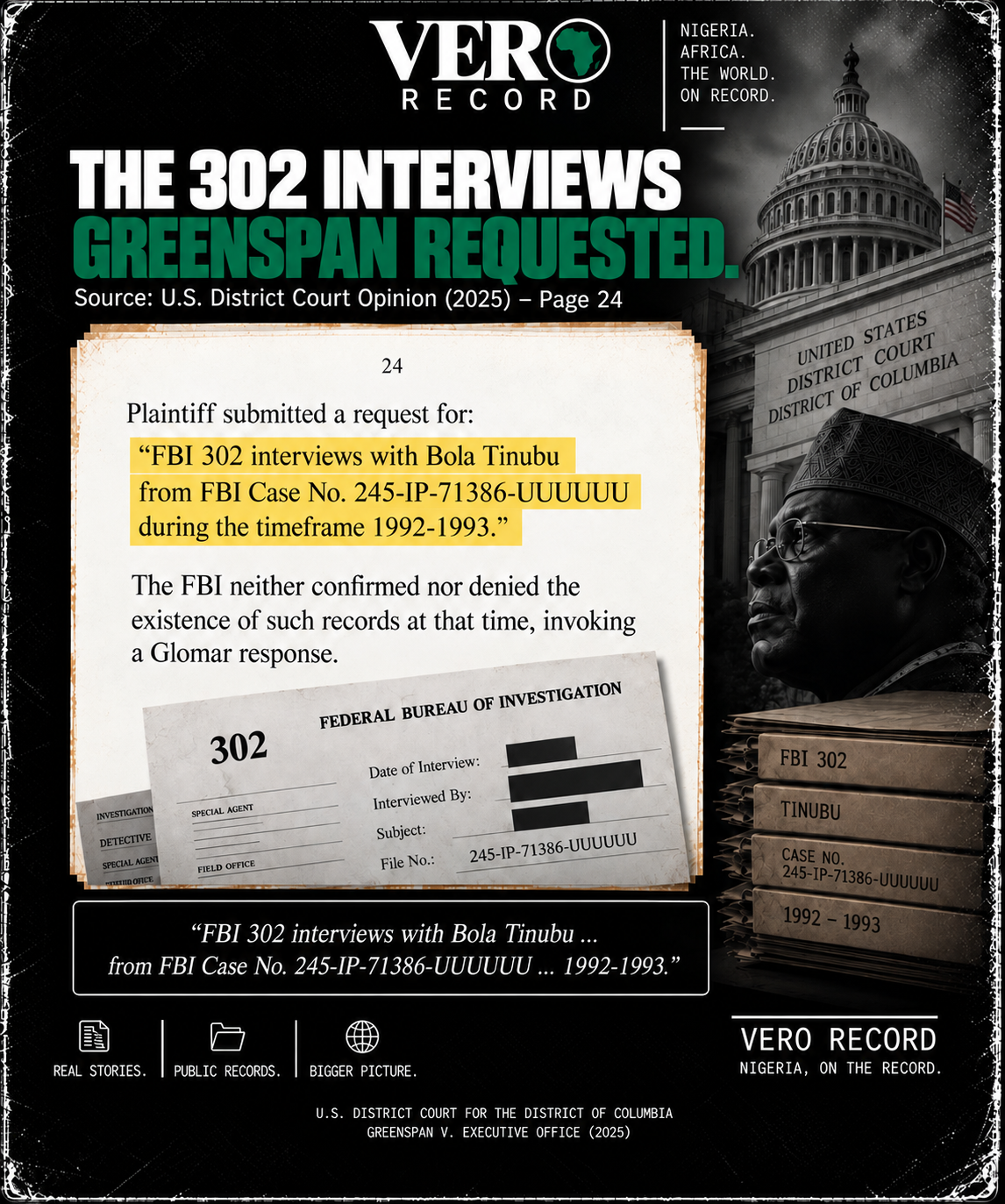
In 2023, Aaron Greenspan asked the FBI for Tinubu’s entire file. He also made a much more specific request for any “FBI 302 interviews with Bola Tinubu” from FBI Case No. 245-IP-71386-UUUUUU covering 1992 to 1993. At the time, the FBI refused to confirm or deny whether those records existed.
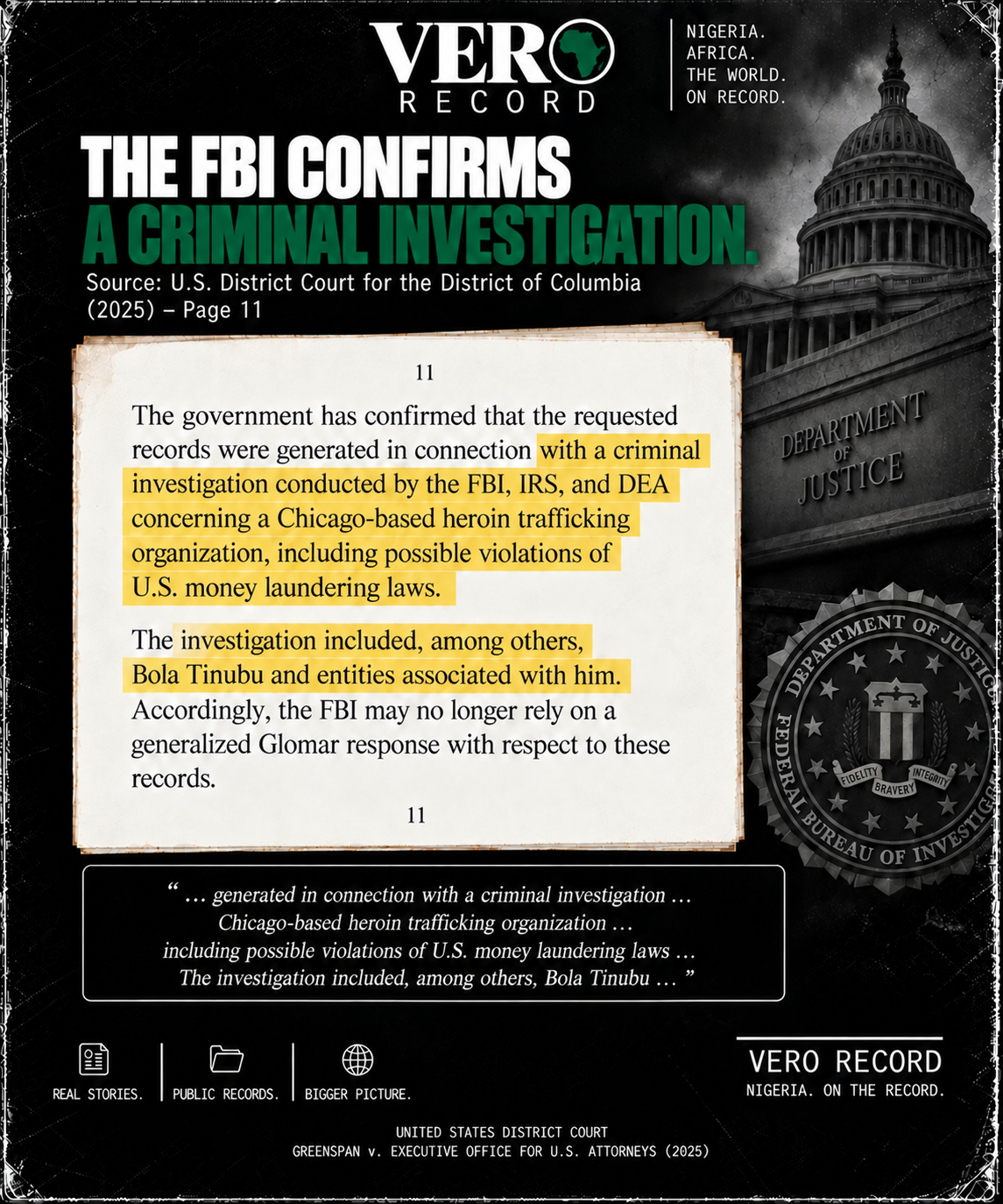
That position later changed. In 2025, Judge Howell ruled that the FBI and DEA could not keep relying on a blanket Glomar response because the US government had already officially acknowledged an earlier criminal investigation involving Tinubu. The records were connected to an FBI, DEA and IRS investigation involving a Chicago heroin-trafficking organisation and possible money-laundering violations.
The court did not find Tinubu guilty of drug trafficking or money laundering. What it did was require the agencies to search for and process non-exempt records responsive to the requests.
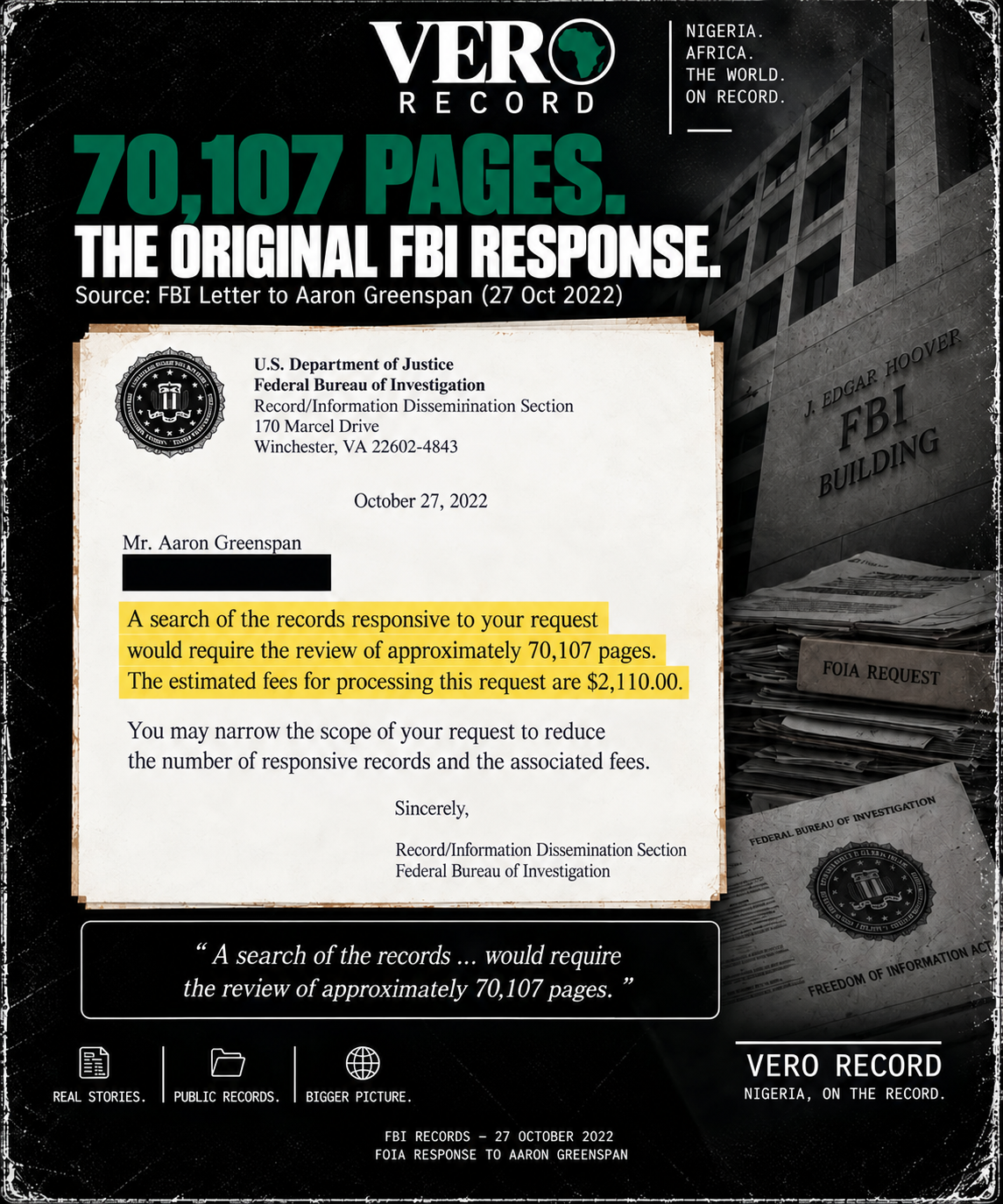
There is also a much larger number buried in the history of this case. Before one of Greenspan’s broader requests was narrowed, the FBI told him that processing it could require the review of approximately 70,107 pages. That does not mean there are 70,107 pages about Tinubu. But it gives an idea of the scale of the wider investigative archive behind the original request.
Fast forward to 2026, and the Presidency now confirms that the FBI and DEA have produced 399 pages of responsive records. Some information remains redacted or withheld, while Tinubu’s lawyers have asserted privacy interests under FOIA Exemption 7(C).
But this is where the case gets more interesting.
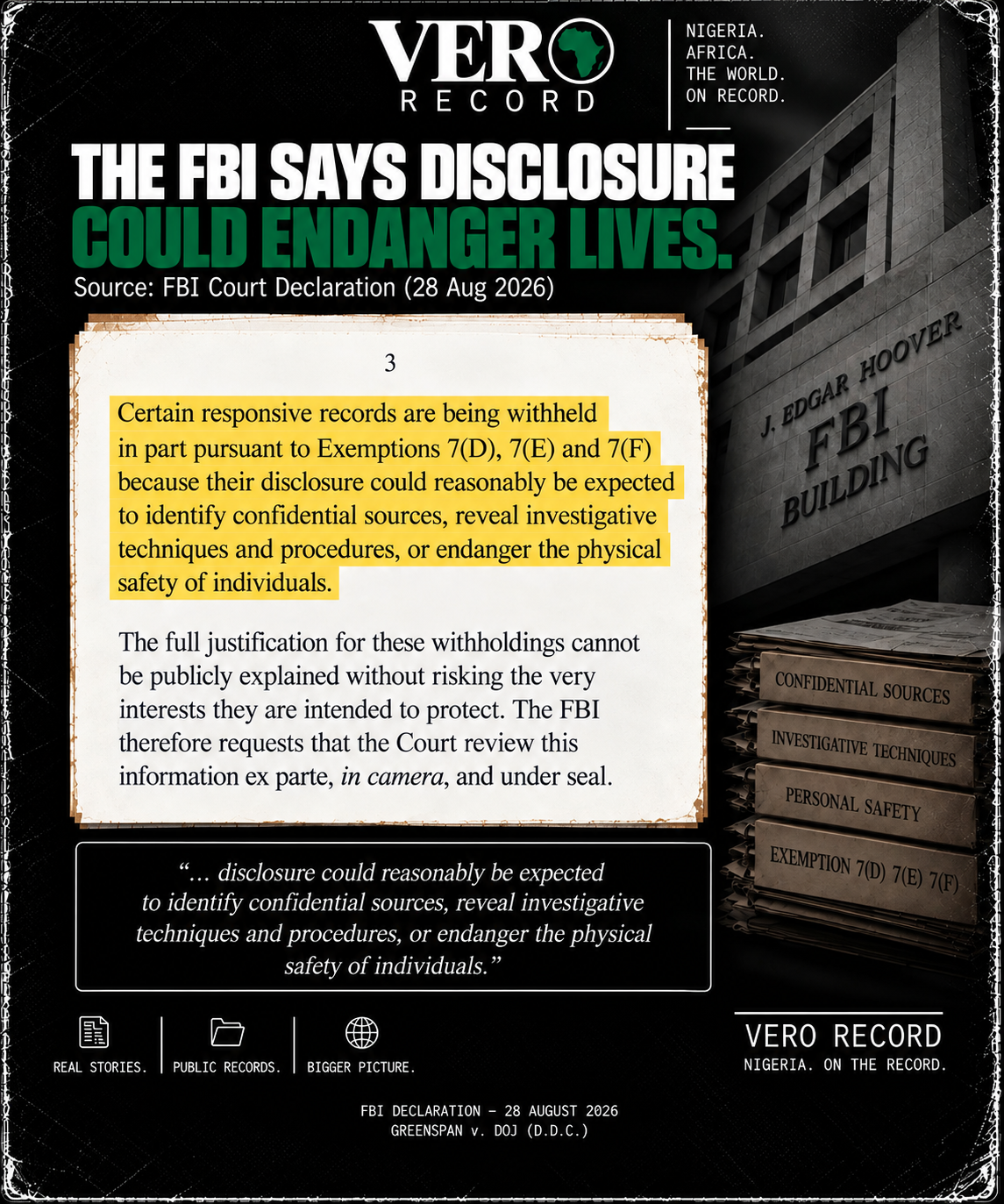
The FBI has also argued that some withheld material is protected because disclosure could reveal confidential sources, investigative techniques or create risks to the physical safety of individuals. The Bureau says parts of its reasoning cannot be fully explained publicly without risking the very interests those exemptions are supposed to protect.
Because of that, some information is being shown to the judge under seal, ex parte and in camera. In simple terms, the court can see information that Greenspan and the public cannot.
That changes the question.
It is no longer simply whether FBI and DEA records exist. They do. The question now is what remains inside those records, what can legally stay hidden, and why.
None of this proves that Tinubu committed a drug offence. The current case is a civil records dispute, not a criminal trial, and investigative records are not the same thing as a conviction.
But no conviction does not mean no investigation. And no arrest record does not mean no investigative file.
The public record now shows a clear progression: the FBI once refused to confirm whether Tinubu-related records existed. A federal judge later ordered searches. 399 pages have now been produced. Parts remain withheld, and some information is being reviewed privately by the court.
And this is where we stop.
Not because the trail ends here.
Because the part we are publishing today is only the surface.
We have already traced more records, more names, more dates and more connections than we are showing now. Some of it changes how the old story looks. Some of it raises questions that have never been properly answered.
We are holding those back for a reason.
You have not seen the Tinubu Files yet.
You have only seen what we were willing to show before October 1.
01 OCT — THE TINUBU FILES
When the full record opens, the conversation changes.
VERO RECORD — Nigeria, on the record.
Truth has a paper trail.
About this dispatch
This is a public post by Dr Vero, archived here as published, with its full text and every graphic that accompanied it. Dispatches are written for a general audience and are not graded: they are a record of what was said publicly and when, not a sourced report.
Graded, document-sourced reporting is kept separate, in the newsroom and the dossiers.